Cost·Updated Oct 28, 2026·7 minute read
Fence Installation Cost in Los Angeles: A Scope-First Budget Guide
Price the fence you actually need: its measured length, material, gates, finish, and the ground underneath. This guide helps Los Angeles homeowners compare complete estimates before choosing a contractor.
By Method Doors & Gates · Van Nuys, CA · CSLB #873646
Start with a measurable scope
Sketch the property line and break the project into straight runs. Note corners, changes in height, slopes, existing walls, and every pedestrian or driveway opening. Ask whether the contractor measures a continuous overall run or subtracts gate openings. Otherwise, a gate can appear inside the fence footage and again as a separate charge.
Measure only where it is safe and accessible. An existing fence is not proof of a legal boundary. If the line is uncertain or disputed, resolve it with the appropriate records or a licensed land surveyor before setting posts. A fabrication site visit measures the work; it does not replace a boundary survey.
Compare materials by specification
| Material | What to specify | Budget and upkeep questions |
|---|---|---|
| Wood | Species, board grade and thickness, spacing, rails, posts, and finish | Is the initial stain or sealer included? How will boards be replaced later? |
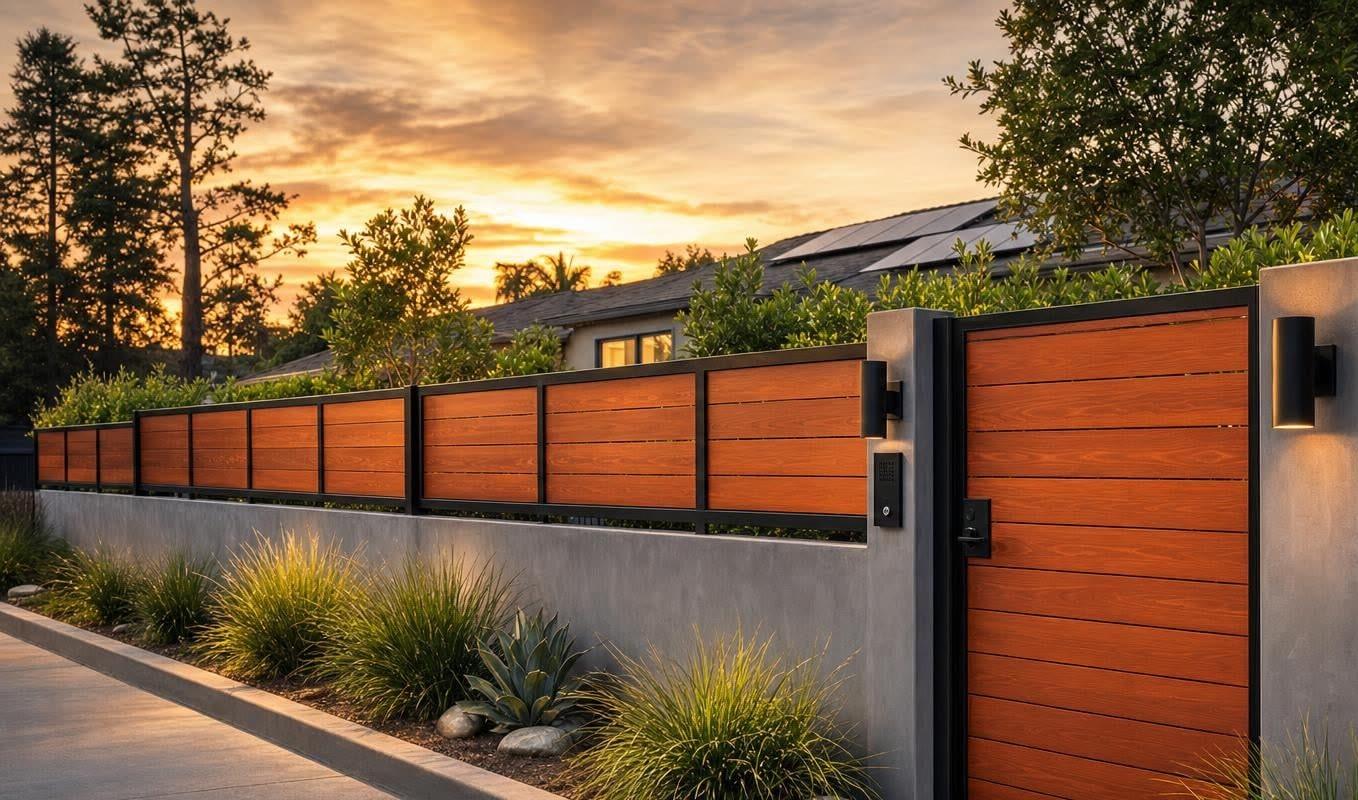
| Steel or ornamental iron | Member sizes, wall thickness, welded details, panels, and coating system | How much shop fabrication is involved? Is coastal corrosion protection specified? |
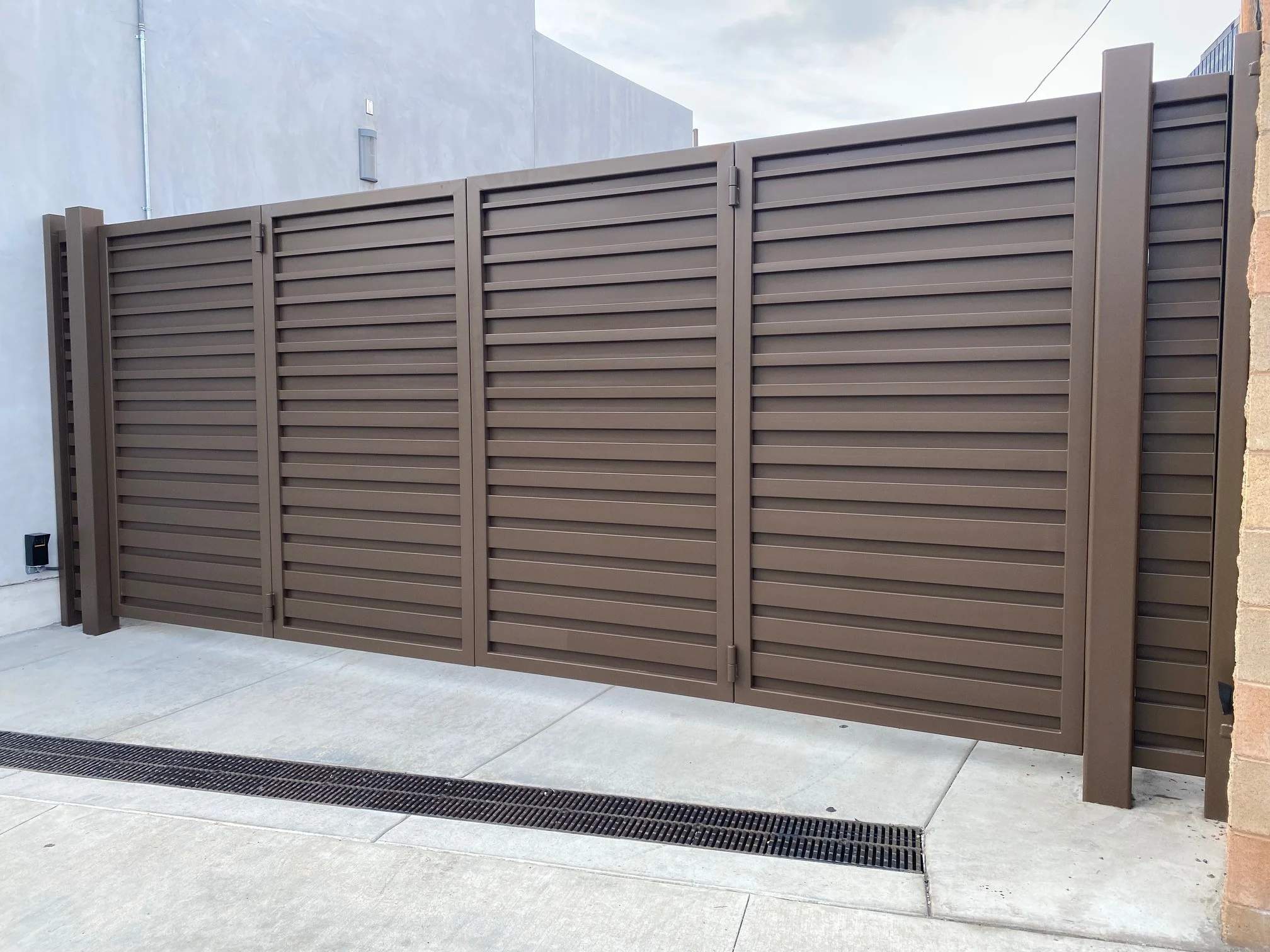
| Aluminum | Alloy or product system, panel strength, connections, and finish | Does the selected system suit the span, wind exposure, and desired privacy? |
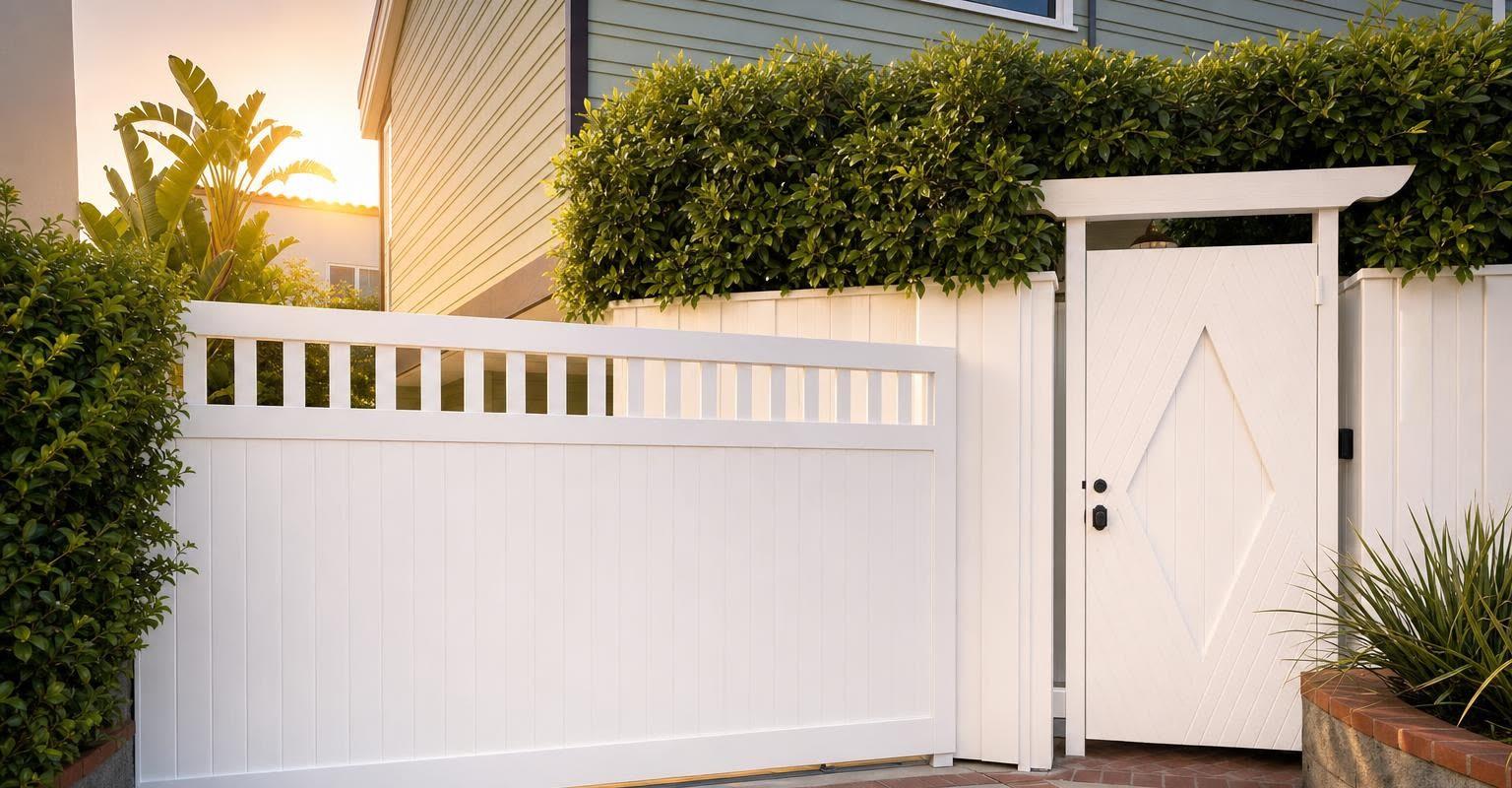
| Vinyl | Product line, reinforced posts where required, panel height, and slope details | Can replacement panels be obtained? Which installation requirements affect the quote? |
| Chain-link | Height, wire gauge, mesh, finish, posts, and gate hardware | Are privacy inserts included? Has their added wind load been considered? |
This is a comparison of common options, not a promise that every system is available from Method. Our fencing and ironwork pages describe our services; tell us the material and use you have in mind so we can confirm fit. A custom steel fence and a stock panel system should not be compared as though their only difference is the price per foot.
A sample budget, with the math exposed
Illustration only: the figures below are invented round numbers to show how to compare quotes. They are not Method prices or Los Angeles market averages.
| Example line item | Calculation | Example subtotal |
|---|---|---|
| 100 feet of fence, excluding gate openings | 100 × a hypothetical $70 installed rate | $7,000 |
| One pedestrian gate | Separately quoted | $900 |
| Removal and disposal | Separately quoted | $600 |
| Illustrative subtotal | Before any other applicable charges | $8,500 |
In this example, dividing the subtotal by 100 gives $85 per fence foot, while the fence line itself is quoted at $70. Both numbers can be mathematically correct; they describe different scopes. Before comparing a second bid, reconcile whether gates, removal, finish, tax, permits, and restoration are included. Do not add an item twice if it is already in the installed rate.
What changes a Los Angeles fence quote
- Slope and changes in grade: decide whether panels step or follow the terrain. A steeper run can change panel lengths, post heights, and installation access; it does not justify an automatic percentage surcharge on every job.
- Posts and footings: soil, wind exposure, fence height, and structural loads determine the design. Ask for the basis of the footing specification rather than assuming a neighborhood name predicts the soil.
- Access and demolition: hand-carrying material through a narrow side yard differs from unloading beside the fence. Existing concrete, roots, and buried obstructions need explicit allowances.
- Gates: list the quantity, clear openings, swing direction, hinges, latches, and any automation separately.
- Finish and surroundings: coastal exposure, irrigation spray, adjoining masonry, landscaping, and paving restoration can affect the scope.
Use this checklist on every estimate
- 1Match the measured footage, height, panel layout, and opening dimensions.
- 2Write down the material specification and post or footing design assumptions.
- 3Confirm demolition, disposal, finish preparation, and initial coating.
- 4Identify permits, drawings, and who handles any required inspections.
- 5List exclusions, allowances, and how unforeseen work is priced before it proceeds.
- 6Record the schedule, payment stages, warranty terms, and maintenance instructions.
Permitting and zoning are separate checks. A fence exempt from a building permit still has to meet the rules for its location. Use our Los Angeles gate and fence permit guide before committing to a height or ordering panels.
Repair a section or replace the run?
A damaged panel with sound posts may be a contained repair. Repeated post movement, widespread decay, failing connections, or corrosion at structural supports changes that calculation. Ask for the repair scope, the condition of the retained parts, and the cost of replacement as separate options. Replacing panels alone will not fix unstable supports. Our fence repair page covers leaning posts, rust at the base of pickets, and damaged panels.
Questions we hear
- Is a longer fence always cheaper per foot?
- Fixed setup costs may spread across a longer run, but difficult access, more corners, or changing ground can outweigh that benefit. Compare measured scope rather than assuming a volume discount.
- Can my neighbor and I split the price?
- You can agree on a scope and payment arrangement, but ownership, notice obligations, and shared-boundary rules are separate from a contractor quote. Resolve the boundary and obtain agreement before authorizing shared work.
- Is staining included in a wood fence quote?
- Only if the written scope says so. Ask for the preparation, coating product, application requirements, and who maintains it; do not assume all contractors include the same finish.
- What drives the cost of an iron or steel fence per foot?
- The specification behind each foot. Height, the size and wall thickness of pickets, rails, and posts, picket spacing (a pool enclosure must stop a 4-inch sphere), and any finials, scrolls, or collars change the steel and shop work in every section. The finish is its own line: primer and powder coat, or hot-dip galvanizing under the color coat, which the American Galvanizers Association calls a duplex system. Runs that step down a slope or turn corners need more fitting than a straight, level line.
- What does a six-foot privacy fence involve?
- Six feet of solid or nearly solid infill on posts set for that height. The scope should name the infill, such as board species and thickness or a steel panel, whether both faces are finished, and the post material, spacing, and footing. Ask how the posts and footings were sized for a solid run at that height. Whether six feet is allowed where the fence will stand is a separate zoning and permit check; start with our permit guide.
- How do gates in the run change the estimate?
- Each gate should appear as its own line, not as more fence. It needs a clear opening, posts that carry the leaf, hinges, a latch or lock, and a swing that clears the ground. A pool gate must also open away from the pool, close by itself, and have its latch 60 inches or more above the ground (HSC §115923). Check that the opening is not also counted in the fence footage. Automation adds an operator, power, and UL 325 safety devices; see our UL 325 guide.
Sources
- LADBS fence answers — permit exemptions and zoning are separate checks. Reviewed October 16, 2026; link re-pointed October 22, 2026, when the general FAQ page stopped listing fence answers.
- American Galvanizers Association: duplex systems — hot-dip galvanizing with a paint or powder topcoat, recommended for coastal exposure and specific colors. Read October 22, 2026.
- California HSC §115923 (FindLaw mirror) — pool enclosure gaps that must not pass a 4-inch sphere; access gates that open away from the pool and self-close, with the self-latching device at least 60 inches above the ground. Read October 22, 2026.
- DASMA TDS 353: vehicular gate operators and UL 325 — UL 325 requires a gate operator to have at least two independent means of entrapment protection for each entrapment zone, and most automatic gates need external sensors. Read October 22, 2026.
- Pricing method: measured quantities and explicitly labeled illustrative arithmetic. No new fence price claims or market averages are asserted.