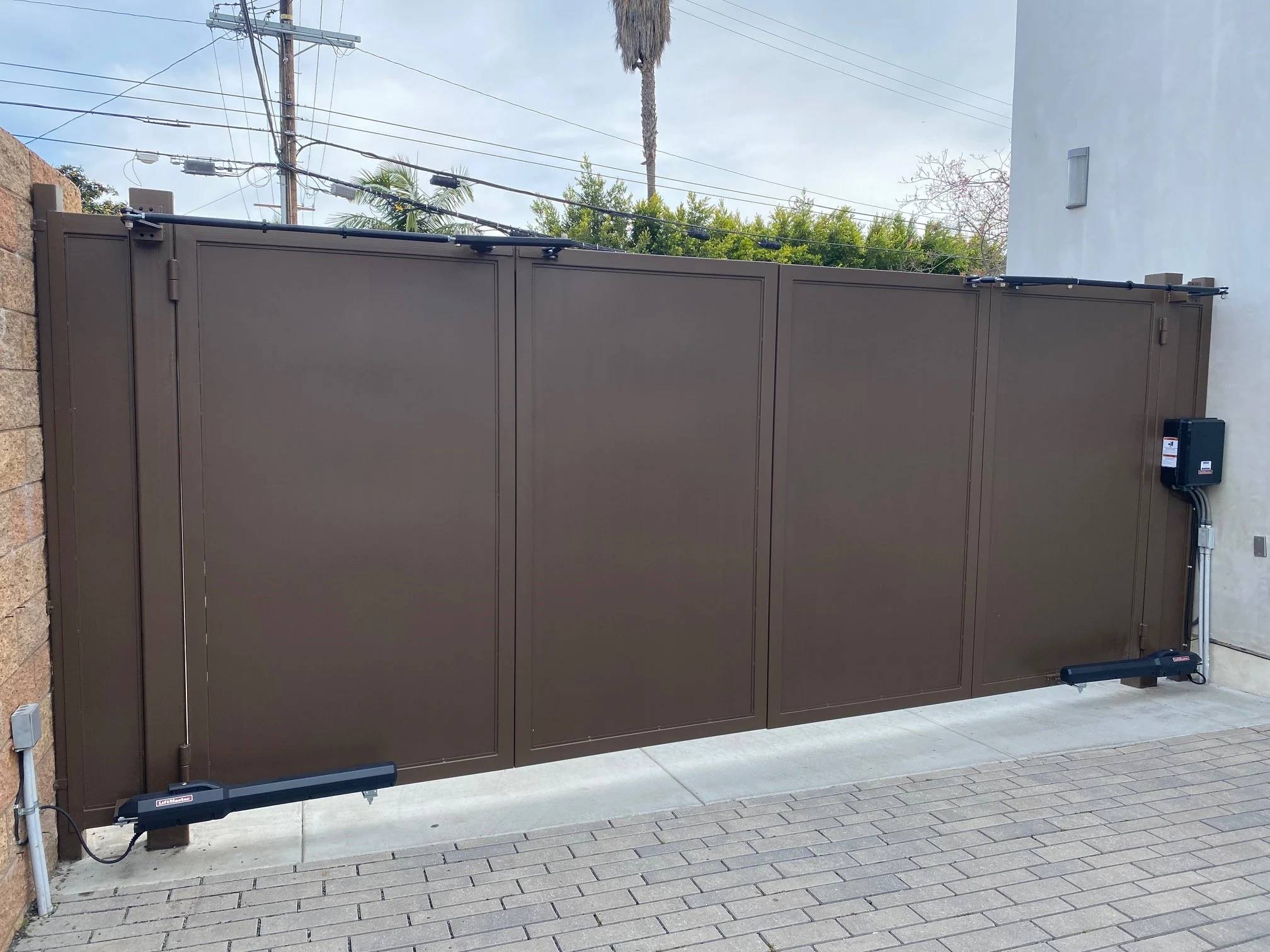
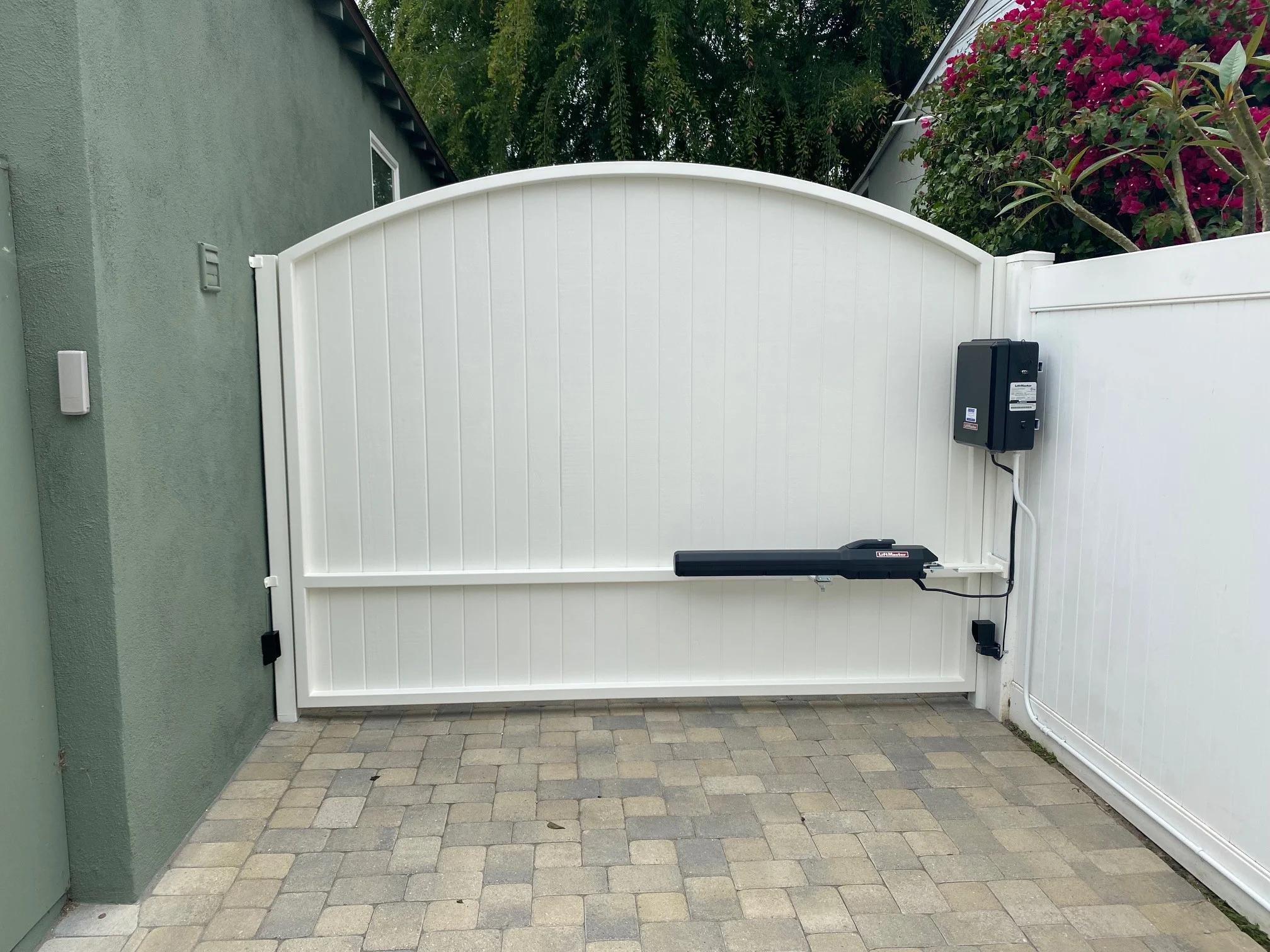
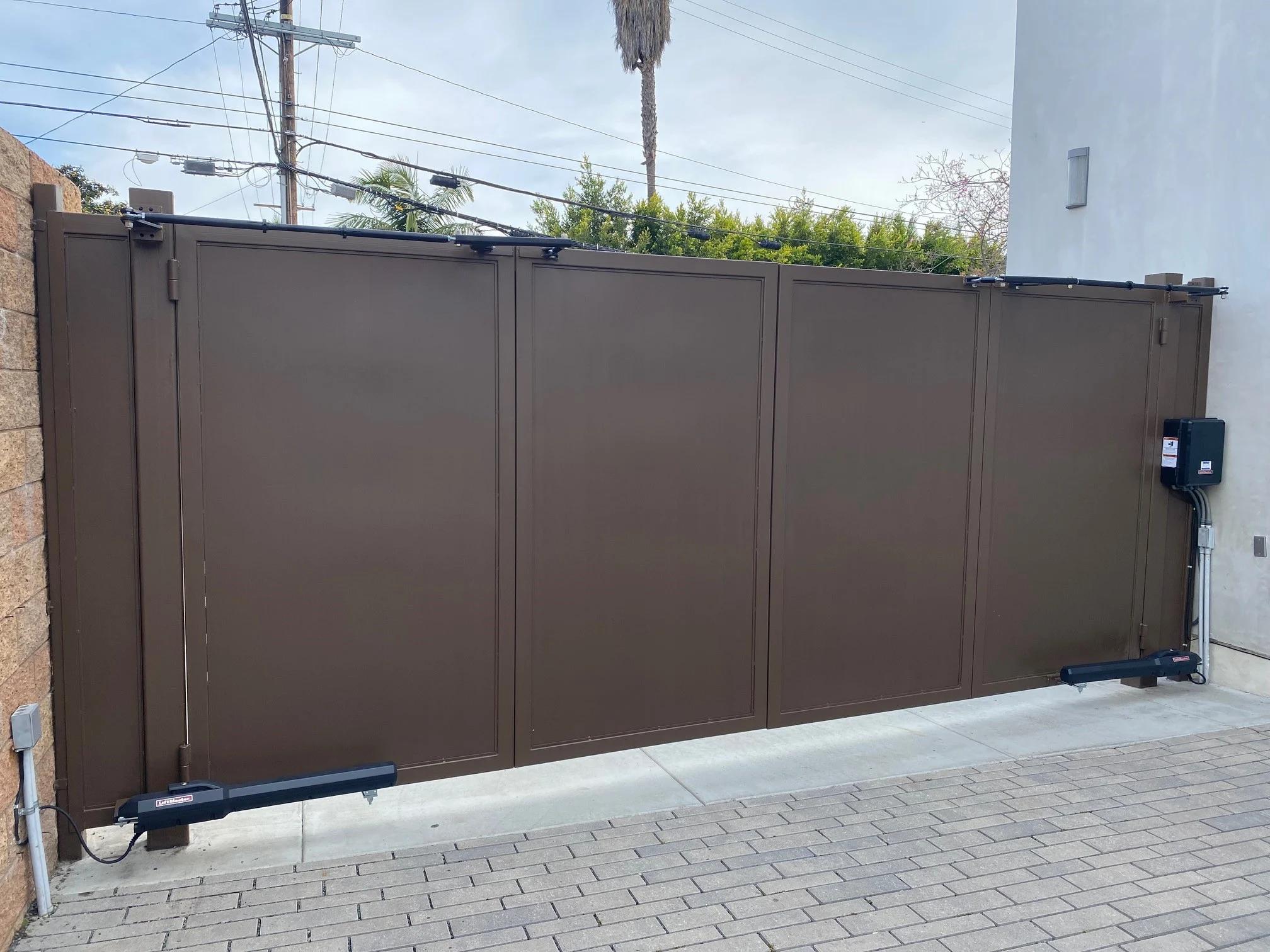
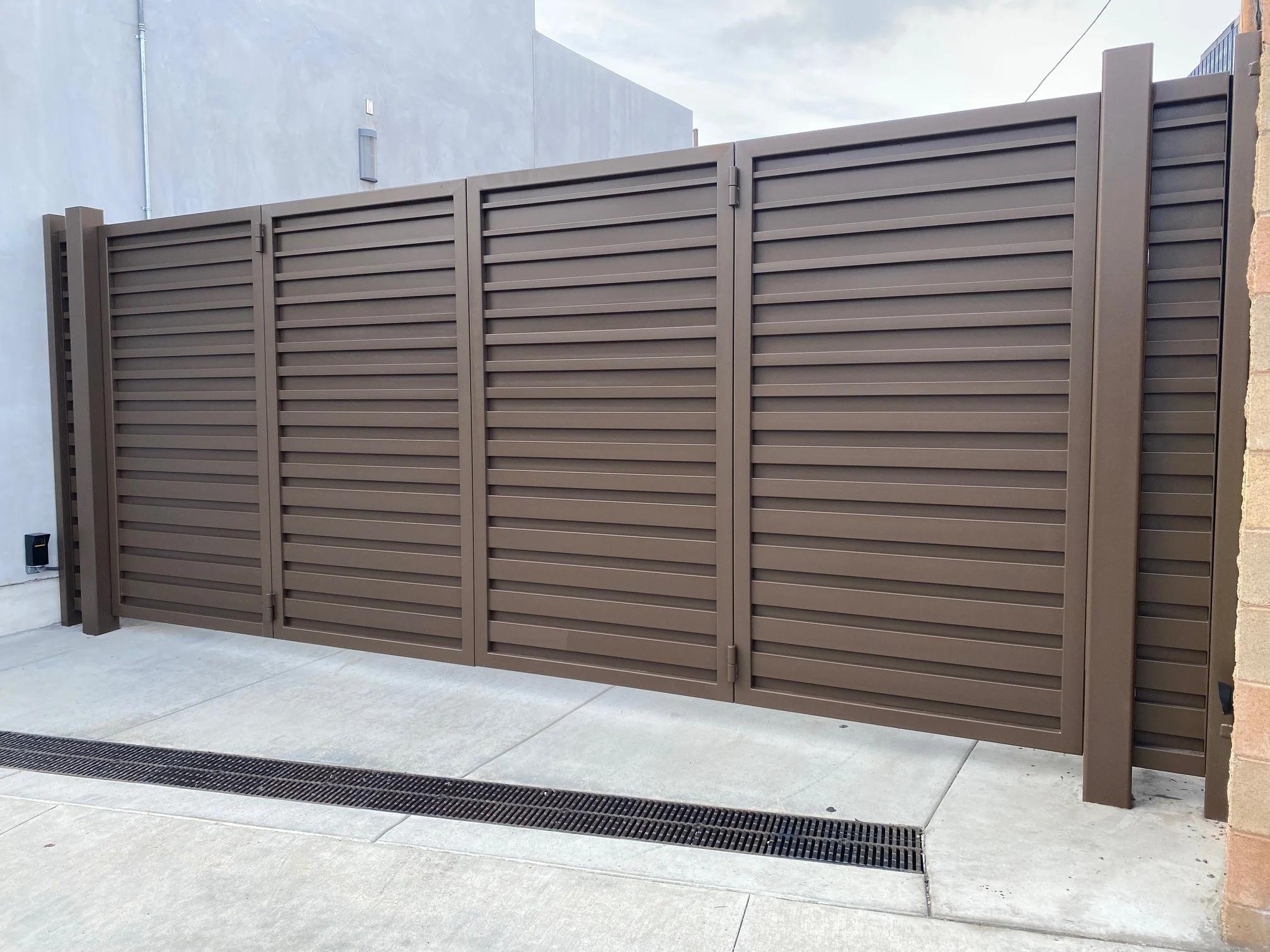
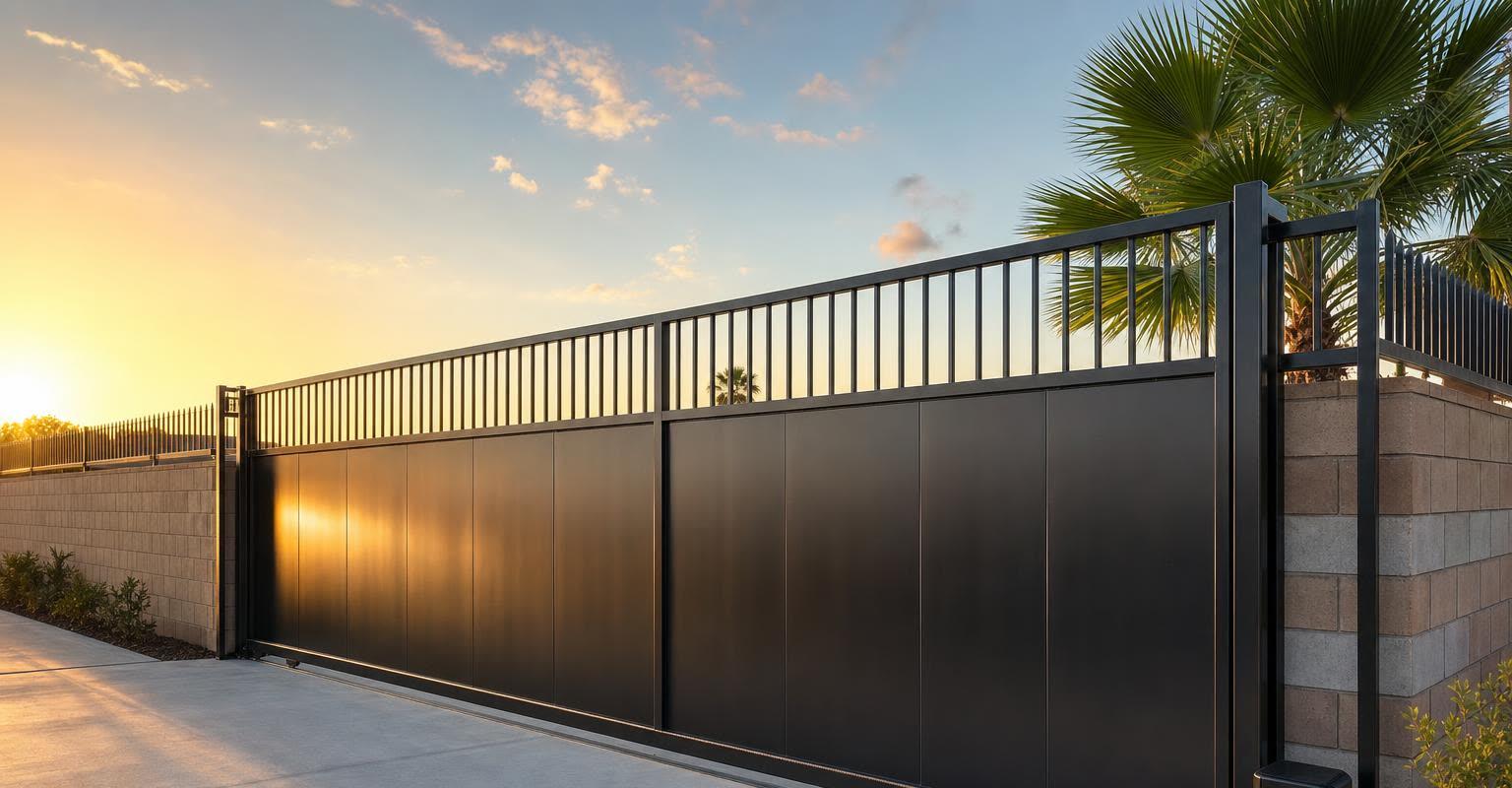
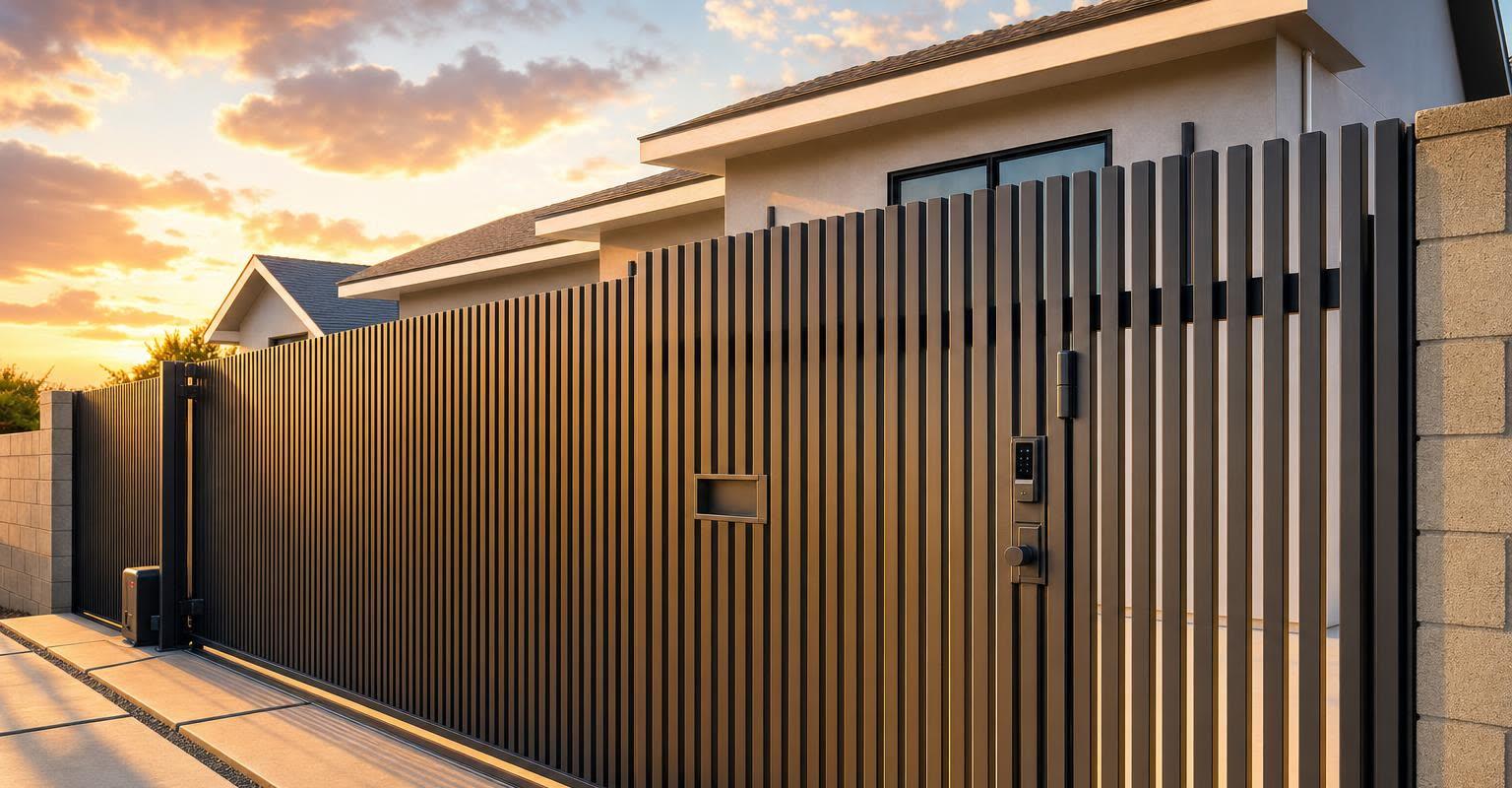
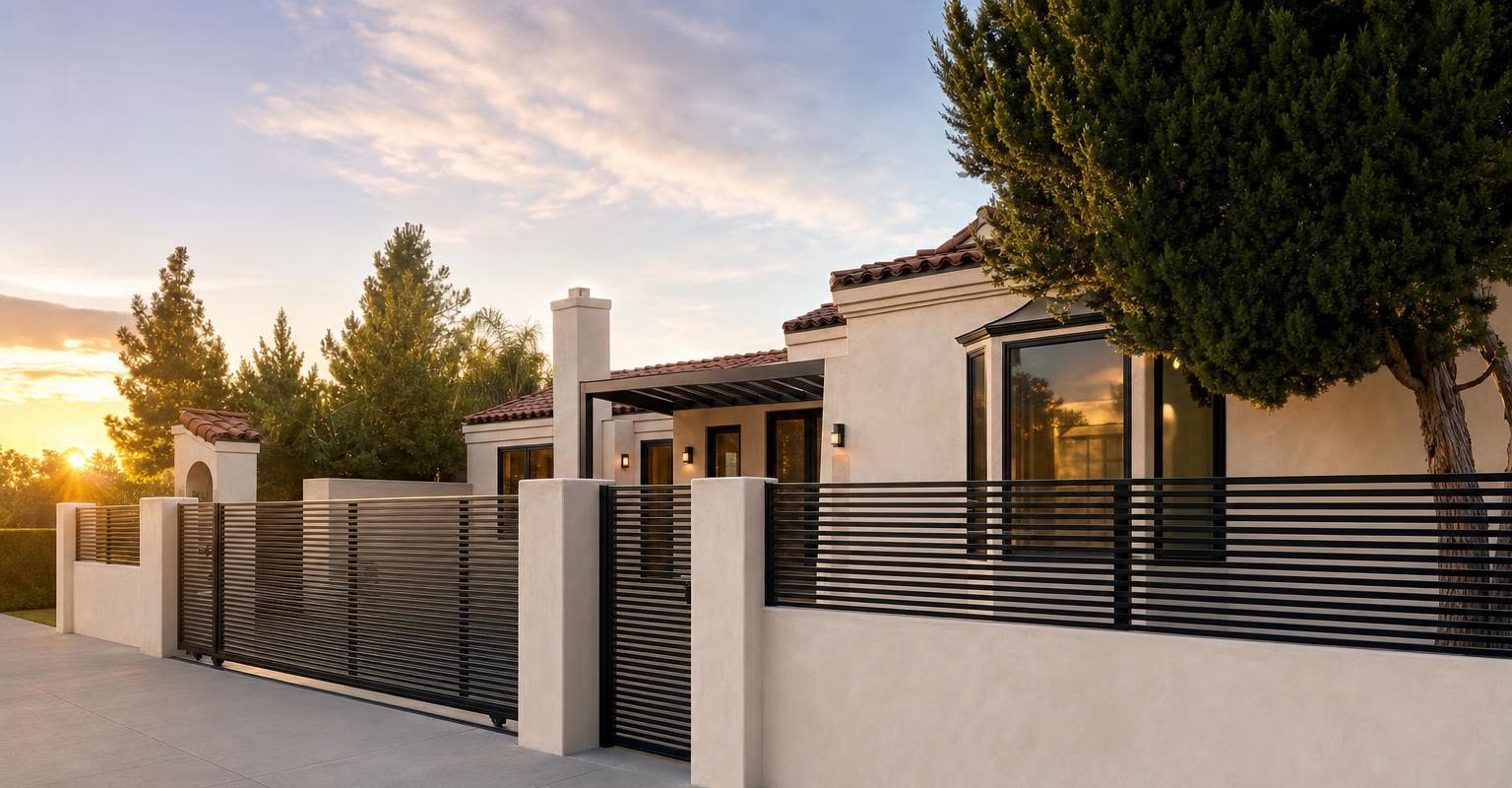
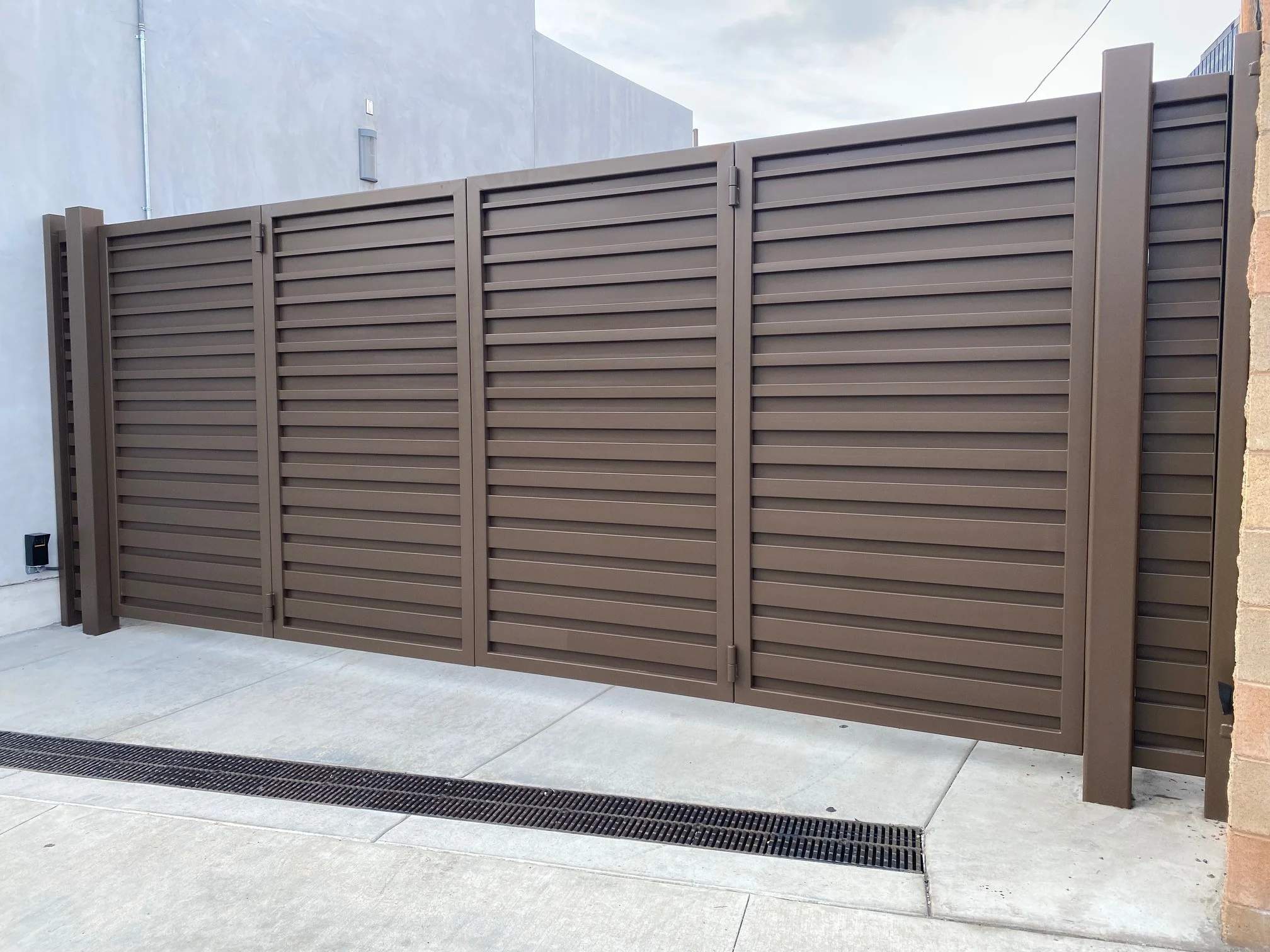
An automatic gate is four decisions made together: a gate built to be driven by a motor, an operator rated for that gate, the sensors that stop it, and the power and controls that run it. Chosen one at a time, they work against each other. A solid privacy leaf ends up on an operator sized for open pickets, or the keypad lands where a visitor can reach through the bars to press it.
We draw the whole system on one sheet. Our fabrication partner builds the gate to that drawing with the operator's mounting point, the photo eyes and edges, the keypad post and the walk gate already placed, so the brackets and the conduit end up where the drawing put them. The operator is picked for the finished leaf's length and weight, for the number of times a day it will open and close, and for the UL 325 usage class of the property. Its listing and its rated limits go on the written estimate.
You decide how people get in: remotes for the cars, a keypad set back from the gate, a video intercom or a cellular phone-entry panel for visitors (intercom and phone entry), and an exit loop so a car leaving doesn't need a remote at all. Power is the other early decision, because a trench is cheaper to dig before the driveway is paved than after.