Repair·Updated Oct 28, 2026·9 minute read
Why Won't My Automatic Gate Close? 8 Causes and the 3 Things to Check First
A gate that opens fine but will not close usually has nothing wrong with its motor. Something is holding it open, on purpose: a safety device or an input that is still calling for open. Here is what to check before you call, in the order a technician checks it.
By Method Doors & Gates · Van Nuys, CA · CSLB #873646
Check these three things first (no tools, no cover off)
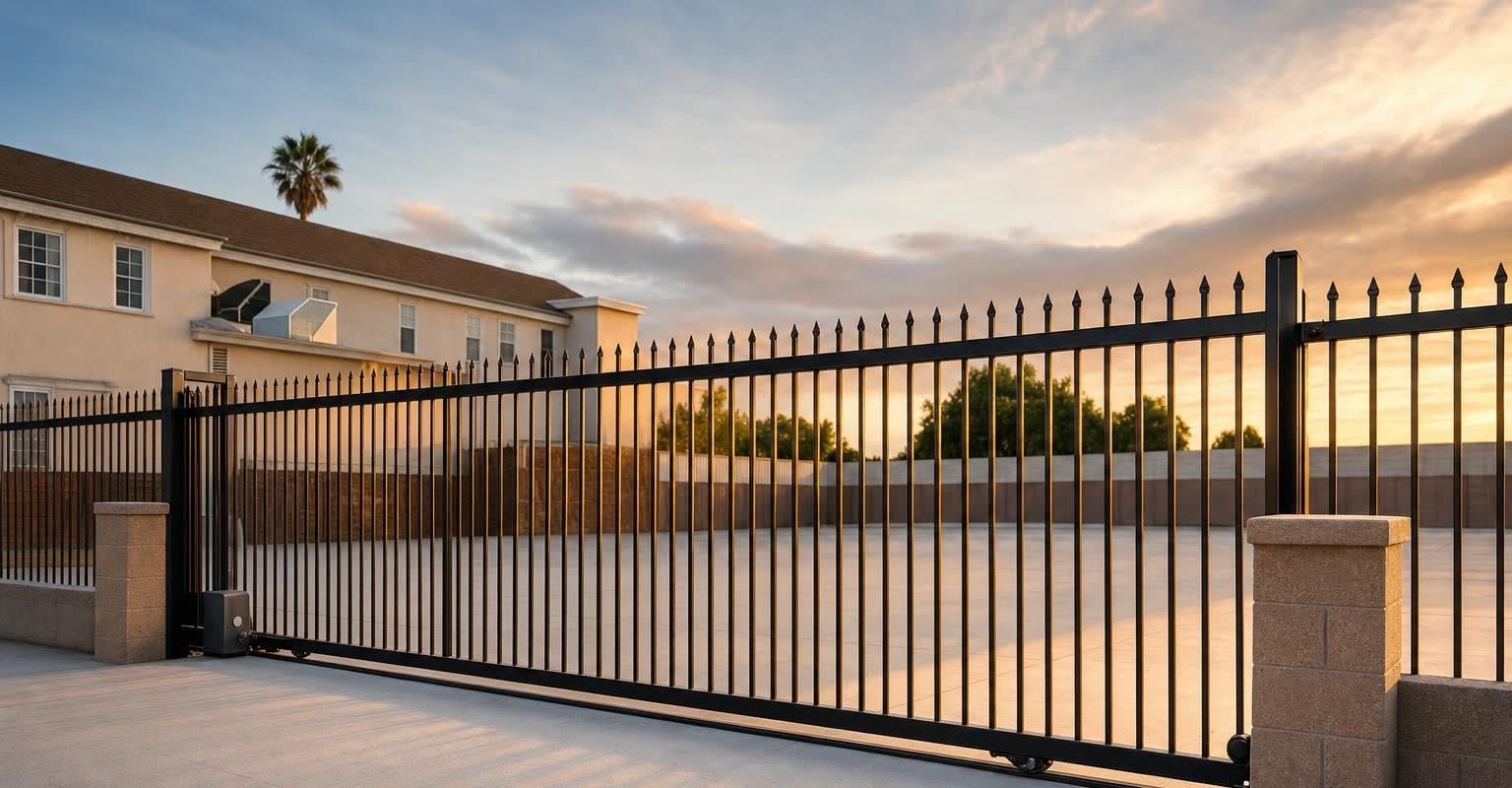
- 1The photo eyes. Look for the small sensors, or a sensor and a reflector, facing each other across the driveway low on the posts near the gate line; DASMA puts common mounting heights between 4 and 27 inches. Wipe both lenses, clear spider webs, leaves, and anything leaning against a post, and make sure nothing — a trash can, a bumper, a planter — sits in the beam. If one has been knocked out of alignment, the operator treats it as a permanent obstruction and refuses to close.
- 2The vehicle loops. If your driveway has saw-cut rectangles in the concrete, those are loop detectors. A car, trailer, or even a large metal object parked over a safety loop tells the operator a vehicle is in the path and holds the gate open. Move it and try again.
- 3Hold-open, party mode, and timers. Many keypads, intercoms, and receivers have a hold-open or “party” function, and some operators have a timer-to-close that can be switched off. If the gate has been open since a delivery, a gathering, or a landscaper’s visit, someone may simply have latched it open.
Do not tape over, unplug, or bypass a photo eye or safety edge to make the gate close. Those devices are the entrapment protection UL 325 requires on an automated gate; a gate closing without them can injure a person or crush a car. If you cannot make the gate safe, leave it open, secure the property another way, and call.
The eight causes, in the order to rule them out
1. A blocked or misaligned photo eye
Start with the photo eyes. The transmitter and receiver have to see each other; dirt, webs, a post that has shifted, water inside the housing after rain, or low afternoon sun straight into the receiver can all break the beam, and DASMA notes that a sensor facing low sun may need a longer hood. The tell is a gate that closes at some times of day and not others, or only after you wipe the lens. Realignment or a replacement eye is a small repair.
2. A loop detector holding the gate open
Loop detectors sense the metal of a car over the loop. A detector that has drifted out of tune, a loop wire cut by a driveway repair, or water in the loop splice can lock the detector in the “vehicle present” state, and the gate stays open. This one is common on driveways that have been resurfaced or trenched since the gate went in.
3. A hold-open command or a timer setting
Keypads, intercoms, and smart controllers can send a constant open signal; a stuck button on a remote does the same thing. Operators with a timer-to-close can have that timer switched off, which turns a gate that used to close on its own into one that waits for a command. Removing remote batteries one at a time and checking the keypad for a held key will usually find the stuck input.
4. Obstruction sensing tripping on a binding or sagging leaf
If the gate begins to close, stops, and goes back, that is the operator’s inherent entrapment protection: it felt more resistance than expected and reversed. The resistance usually comes from the gate — a leaf that has dropped at the latch side and drags on the ground, a hinge that has seized, debris in a slide track, or wind loading a solid panel. Under UL 325, an operator whose built-in sensing meets a second obstruction in a row must stop, sound an alarm, and wait for a reset from a wired control. Fix the bind first; turning the force up is the wrong answer and unsafe. We cover the mechanics in Gate Stops Halfway or Reverses When Closing.
5. A close-limit fault
Operators know where “closed” is from a limit switch or an encoder. If the limit has been knocked off its setting, the operator may think the gate is already closed and ignore the command, or run past and reverse. This is a technician adjustment, not a homeowner one.
6. Low battery or a power problem on DC and solar units
Battery-backed and solar operators will often open — the lighter direction on a sloped drive — and then lack the reserve to close, or they close slowly and give up. A battery that no longer holds a charge, a charger fault, or a solar panel shaded by a tree that has grown since the install are the usual culprits. If the gate only misbehaves at night or after a run of cloudy days, start here.
7. A control-board or wiring fault
Boards fail after surges and lightning, terminals corrode, low-voltage wires get nicked by string trimmers, and rodents chew insulation. The symptom is a gate that ignores the close command entirely, or one that behaves differently from one day to the next. This is a diagnostic visit: a technician reads the board’s indicator lights, checks inputs one by one, and either repairs the wiring or replaces the board.
8. Motor, gear, or clutch failure
Usually preceded by warning signs: a hum with no movement, slower cycles, new noises. A gate that opens but won’t close on a stripped gear or a worn clutch is telling you the operator is near the end of its life. Whether to repair or replace it is a cost question we answer in Repair or Replace Your Gate Operator?.
When it is safe to keep using the gate — and when it isn’t
- Safe to use for now: the gate holds open because of a photo eye or loop, and you can close it manually with the operator’s release or leave it open until the visit.
- Use the manual release and stop cycling it: the gate reverses part-way, drags, or makes new noises. Every reversal is the operator straining against a bind.
- Do not use it at all: a safety device has been disabled, the gate is off its track or hinge, or the leaf can move on its own. Leave it in a safe position and call.
The repair visit and what it costs
What a technician checks on the visit, in order, is in the troubleshooting guide. The starting price of each of these fixes, from a photo eye to a replacement operator, is in Gate Repair Cost in Los Angeles.
How to keep it from happening again
- Wipe the photo-eye lenses when you wash the car; check that nothing has been stacked in the beam path.
- Keep planters, trash cans, and parked vehicles off the loops.
- If the driveway is going to be resurfaced or trenched, tell the contractor where the loops are.
- Book operator service at the intervals its manual gives, so force settings, limits, hinges, and battery are checked in one visit.
Questions we hear
- Is it safe to close the gate by hand?
- Yes, on a level, undamaged gate, using the operator’s manual release, which is usually a key or lever on the operator housing. Switch the power off first, as DASMA’s inspection checklist does, and never force the leaf against an engaged operator. If the gate is off its track or hinges, damaged, or on a slope where it could roll once released, leave it where it is and call.
- Why does it close at night but not during the day?
- Low sun shining directly into a photo-eye receiver can flood it and break the beam. A hood, a small realignment, or swapping which side the receiver sits on fixes it.
- Why does it close halfway and go back?
- That is the obstruction sensing reversing because the gate met resistance — a dragging leaf, a stiff hinge, debris in the track, or wind on a solid panel. The mechanical bind has to be fixed; raising the force setting to push through it is unsafe.
- Can I bypass the photo eye just for now?
- No. Photo eyes and safety edges are the entrapment protection required on an automated gate, and a gate closing without them can injure someone. If the eye is the problem, leave the gate open until it is repaired.
- How fast can you come out?
- Our line is answered 24/7 and we run emergency calls across the Valley and the Westside. Tell us whether the gate is stuck open or stuck closed and whether a car is trapped, and the call is handled as an emergency. If you can’t get in or out, or can’t leave the property open, a technician can come out that night; otherwise we’ll usually suggest the morning, at the standard $45 service call. An after-hours charge applies after 8 pm.
- Does this mean I need a new operator?
- Not necessarily. Seven of the eight causes above are a sensor, loop, input, limit, battery, wiring, or hinge fault, and those fall under Method’s published starting prices for operator repair ($300 – $2,000) and common gate repairs ($500 – $4,000). A replacement operator makes sense only when the motor, gearbox, or board is failing on a unit old enough that repairing it does not pay; Repair or Replace Your Gate Operator? explains the decision.
Sources
- DASMA TDS 353, vehicular gate operators and the ANSI/CAN/UL 325 standard: two independent entrapment protection means for each entrapment zone; the stop, alarm and wired reset after a second sequential obstruction; no field changes that bypass the monitoring of external devices.
- DASMA TDS 356, UL 325 and gate installations FAQ: reset controls within sight of the gate; photo eyes and edges as two of several acceptable protection types.
- DASMA TDS 377, selection and placement of photoelectric sensors: common mounting heights of 4 to 27 inches; a longer hood for sensors facing low sun.
- DASMA TDS 352, guidelines for installers and end users and TDS 371, checklist for inspectors and property owners: owners must not overtighten the clutch to compensate for a stiff gate; stop using a gate whose safety systems misbehave; power off before using the manual release.
- DoorKing: Series 6050 and 6100 installation/owner’s manual (a gate that opens but will not close: keying inputs, external safety devices and loop detectors that hold it open; the automatic-close setting) and loop information manual (detectors that “lock on” through poor connections or moisture). LiftMaster: solar gate cycles reference guide (panels must be clear of shade all day; dealer-hosted copy).
- Brand documents support technical points only and say nothing about which equipment Method installs or services. Sources read October 22, 2026; the owner’s manual for your model sets its release and reset steps.