Commercial·Updated Oct 28, 2026·16 minute read
Apartment & HOA Gates: Planning, Replacement & Maintenance in Los Angeles
A shared entrance is judged on uptime: when it fails, it fails for every resident at once. This guide covers what keeps a community gate running — the right operator class, access control you can actually administer, maintenance you can document, fire-department access, and a service contract that says what it covers.
By Method Doors & Gates · Van Nuys, CA · CSLB #873646
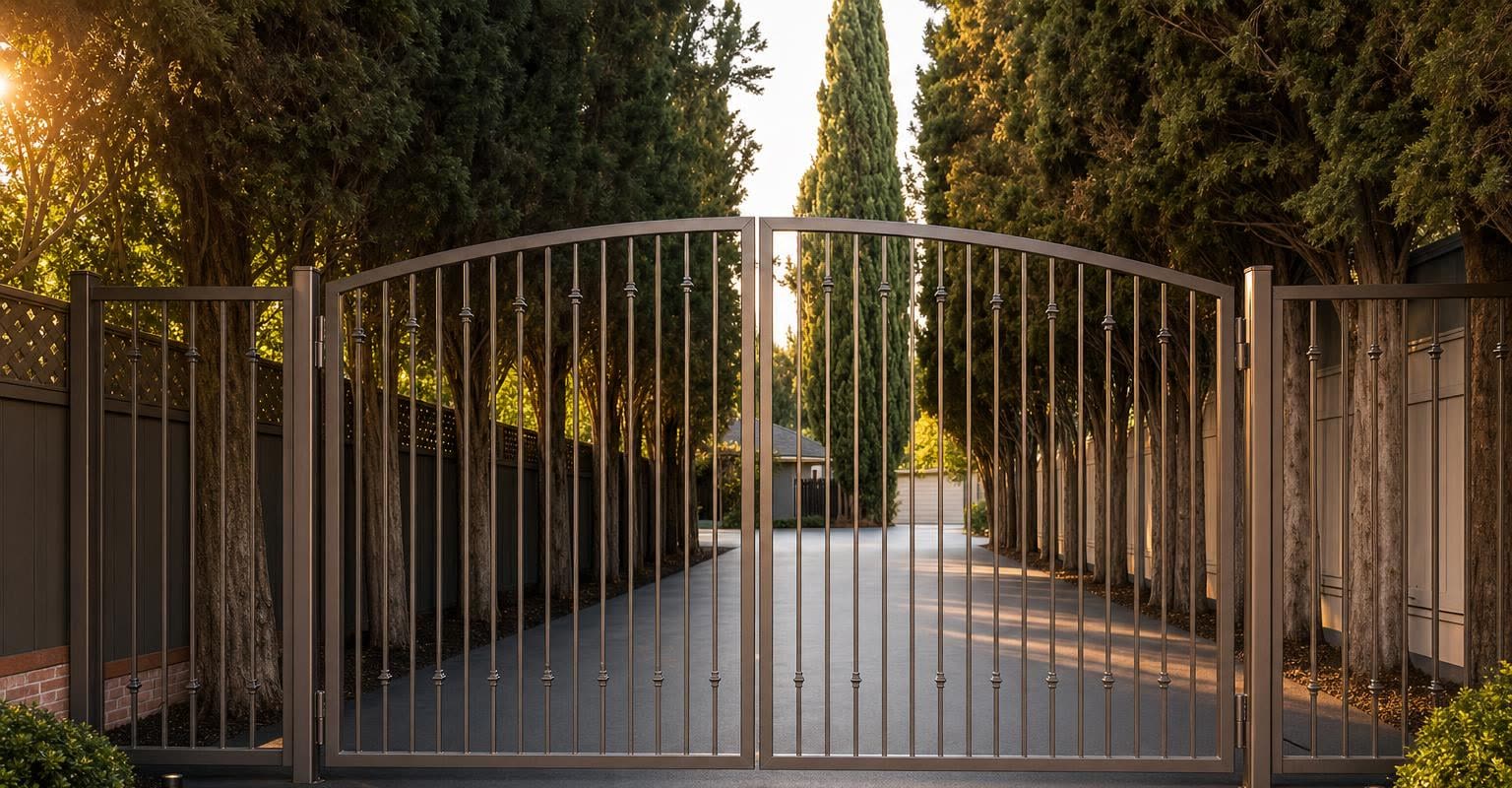
If you are planning a new entrance or replacing one, our commercial gates page explains how we survey and scope multifamily, HOA, and industrial work. This guide is the background for that conversation — and for keeping the gate you already have in service.
Why building gates fail
When a shared gate keeps breaking, look for a mismatch before blaming the last part that failed. Four checks cover most of it:
- Class and rating. UL 325 defines Class I as residential use for one to four single-family dwellings and Class II as commercial locations such as multifamily housing of five or more units, hotels, and retail. Operators are marked with every class they are intended for, and manufacturers specify each operator’s maximum gate size and weight. A residential operator on an apartment garage gate is a mismatch no repair fixes.
- The gate itself. A leaf that binds, sags, or drags makes any operator strain. DASMA, the Door & Access Systems Manufacturers Association, says to make sure the gate moves freely and to repair worn hardware before an operator goes on — and never to turn up the operator’s force to push a stiff or damaged gate.
- Safety and detection devices. When a photo eye is blocked or an edge is pressed, the gate stops and may reverse; that is the system working. Operators made since 2016 also monitor their external entrapment-protection devices and will not run automatically if one is missing or faulted, so a damaged sensor can take a gate out of service.
- Impact and misuse. Vehicle strikes and people pushing, climbing, or walking through the vehicle gate add damage and risk. DASMA’s owner guidance is to keep people away from the gate and to stop using it if it is damaged, hard to move, or its safety systems misbehave.
Keep a failure log: date, symptom, what was replaced, and by whom. A pattern — the same sensor, the same hinge, the same hour of the day — points to the cause. Our troubleshooting guide explains the common symptoms.
Choosing gates and operators for high-traffic entrances
Start from the use, not the catalog. DASMA tells specifiers to choose an operator suited to the gate’s type, size, frequency of use, location, and users, with UL 325’s usage classes as the reference. For a shared entrance, gather:
- Traffic: how many times the gate cycles on a busy day and at the morning and evening peaks. Count it, or ask your technician whether the operator or access system records cycles.
- Gate size and weight: compared with the operator manufacturer’s maximum gate length and weight.
- Usage class: Class II for multifamily and other sites open to the public; Class III for industrial sites not open to the public; Class IV for guarded, restricted-access sites.
- Queueing room: where visitors wait. LAFD’s security-gate standards call for a stacking lane sized to the projected traffic, so cars waiting to be let in do not block the cross street.
- Pedestrians: a separate walk-through entrance, so people never share the vehicle gate’s path (below).
Slide or swing is a site question as much as a traffic one; our sliding vs. swing comparison covers the trade-offs. For anti-climb and perimeter specifications, see security gates.
Resident and guest access: credentials, directories, and logs
Access control is where most day-to-day gate administration happens, so choose it for how you will manage people. Telephone-entry and intercom systems commonly control access at apartment houses, condominiums, and gated communities; because visitors include the public, DASMA notes these systems must meet federal accessibility (ADA) and FCC requirements, and its DASMA 303 standard covers accessible entry systems.
- Credentials: fobs, cards, codes, or phone apps — and how quickly you can turn one off when a resident moves out or loses a fob.
- Guests and deliveries: a directory that calls residents, temporary codes, or both.
- Records: whether the system logs who entered and when, who can see the log, and how long it is kept.
- Ownership and fees: who holds the administrator account and the resident database, and what recurring service, software, or cellular fees apply.
- Exit: how departing vehicles open the gate — an exit loop, for example — and how pedestrians leave.
- Placement: keypads, readers, and call boxes at least six feet from any moving part of the gate, where no one has to reach over, under, around, or through the gate to use them, as UL 325 requires.
A vehicle-detection loop is a wire embedded in the pavement. If the drive is a structural slab — a parking-garage deck, for example — DASMA advises consulting a structural engineer before cutting into it. And only devices the operator’s manufacturer qualifies as entrapment protection count toward UL 325’s safety requirement; a loop’s job is detecting vehicles.
For equipment options, see intercom and phone entry and commercial gate access control.
Pedestrian gates
Keep people out of the vehicle gate. UL 325 requires a separate pedestrian access opening wherever pedestrian traffic is present, designed so people will actually use it — a path around the vehicle gate or a nearby entrance door can serve. DASMA adds that vehicular gate operators are for vehicular gates only, and tells owners to actively discourage people from walking through the vehicle gate. If you want a powered pedestrian gate, ask what its operator is listed for — UL 325’s September 2025 revision added provisions on pedestrian gates and gate operators.
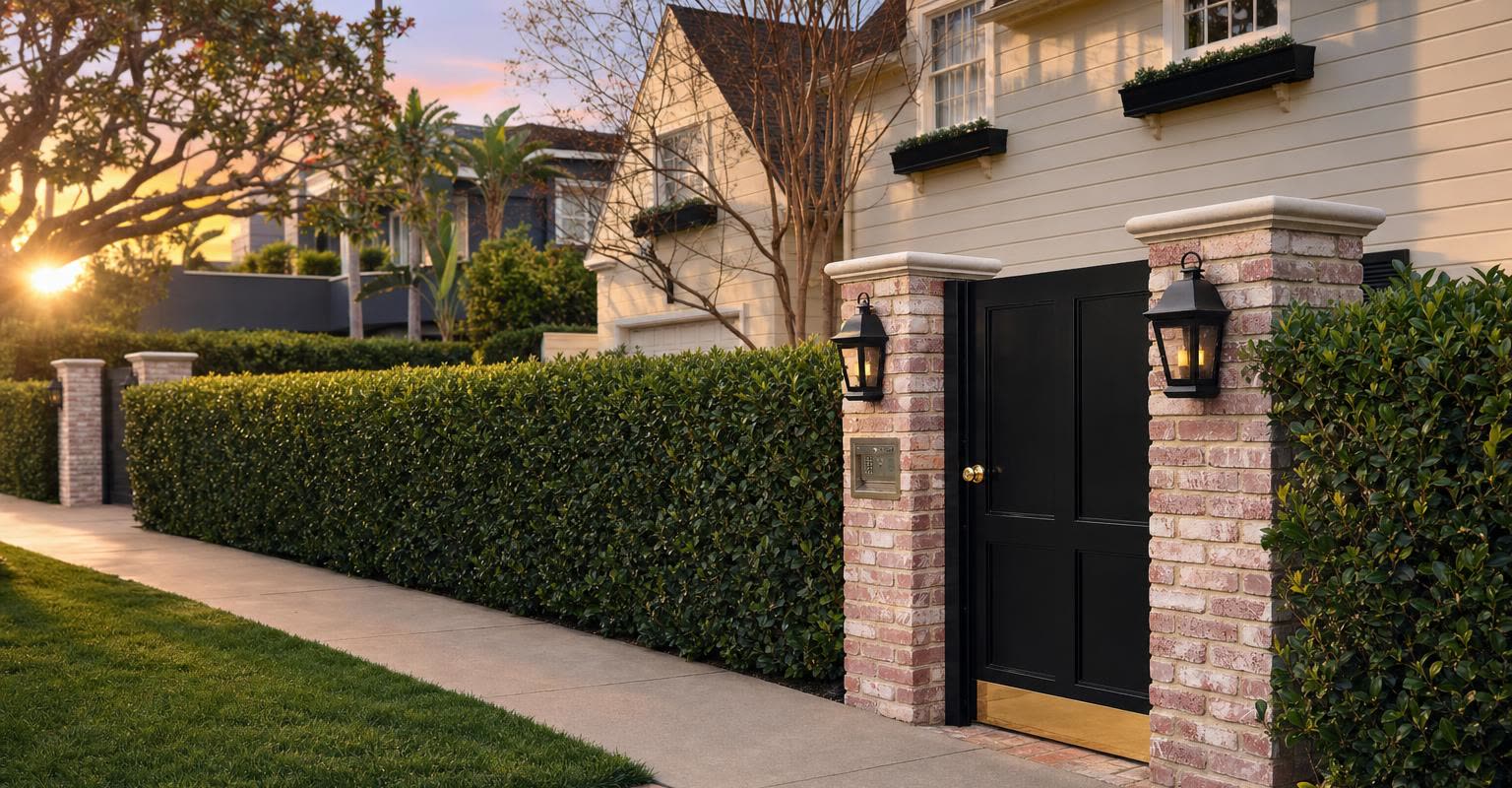
A pedestrian gate on an accessible route is treated like a door under the 2010 ADA Standards: at least 32 inches of clear opening width, operable hardware 34 to 48 inches above the ground (California’s building code, CBC 11B-404.2.7, caps it at 44 inches), and separate requirements for automatic gates. Have your designer or building department confirm which accessibility requirements apply to your site, and if the gate is on a building’s exit path, ask what the exit rules require before choosing locks and closers.
Maintenance plans: what a visit covers and how often
The interval comes from the equipment. DASMA’s owner guidance is to follow the manufacturer’s recommended maintenance schedule, check the entrapment-protection devices on that schedule, and ask the installer about a service agreement. If the installation and maintenance manuals were not left with the property, have your technician identify each operator and get them for the file; if a manual sets intervals by cycle count, track cycles.
| Area | What a technician checks | Basis |
|---|---|---|
| Safety devices | Each photo eye and edge for damage and mounting; reversal tests on contact and non-contact devices | DASMA checklist (TDS #371) |
| Gate and hardware | Rollers, hinges, brackets, and fasteners for alignment, wear, rust, and looseness; roller guards and fall-over protection | DASMA checklist |
| Operator | Listing label; a full open-and-close cycle, watching for uneven speed, sway, or unusual stops; the manual release, per the manufacturer’s instructions | DASMA checklist |
| Controls and signs | User controls six feet or more from the gate; warning signs visible from both sides | DASMA checklist |
| Pedestrian access | A separate route where people will not contact the moving gate | DASMA checklist |
| Fire-department access | The emergency override opens the gate as the fire authority requires | California Fire Code section 503.6 |
| Access control | Readers, keypads, directory, and exit detection working; credential list current | The system manufacturer’s manual |
Leave tests and adjustments to a trained gate technician. DASMA’s checklist says not to repair or adjust a gate system yourself, and its reversal tests are done close to a moving gate.
Ask for a written record of every visit — date, technician, devices tested and results, parts replaced. DASMA’s checklist ends with signature lines for the inspector and the owner; that dated record belongs in the property file.
After-hours failures: what to expect
Decide before it happens. A gate stuck closed traps cars; a gate stuck open leaves the property unsecured. Agree in advance on:
- Who calls, and who approves cost. Name the people who can authorize an after-hours call-out, and up to what amount.
- What on-site staff may do. Only what the installer demonstrated and the manual describes. DASMA lists turning off power and operating the manual release among the things an installer should show the owner. No one should open the operator or bypass a safety device.
- How the gate is left until the repair. If it has to stay open or closed, the technician sets that up, and residents get notice.
- Fire access. Whatever state the gate is left in, its emergency operation has to keep working.
- Power outages. Know whether each operator has battery backup and what it does when the battery runs down; see what happens to an automatic gate in a power outage.
Method runs a 24/7 emergency line for failed gates — see emergency gate repair. If a gate is stuck open or closed, a technician can come out that night; otherwise we will usually suggest the morning. Visits after 8 pm carry an after-hours charge, and after midnight it is an extra $300–$400 on top of the repair. Routine faults go through commercial gate repair.
Fire-department access and the code items boards ask about
The California Fire Code requires the fire code official to approve any security gate across a fire apparatus access road. The gate needs an approved means of emergency operation, both must be maintained operational at all times, electric operators must be listed to UL 325, and automatic gates must comply with ASTM F2200 (section 503.6). The building code’s automatic vehicular gate section (3110) points to the same two standards. Our fire access guide sets out the LAFD and County Fire gate requirements in full and tracks where the Zone 0 rules stand.
In the City of Los Angeles, LAFD’s posted security-gate requirements add specifics for the private streets, access roads, and fire lanes the department needs:
- Gates may not reduce the roadway below the department’s required width: 20 feet clear on LAFD’s standard.
- A stacking lane sized to the projected traffic, so visitors waiting at the gate do not block the cross street.
- Power-operated gates need an LAFD-approved override device: a red FIRE DEPARTMENT ACCESS box on a pillar or post beside the gate, with a switch — or an accepted Knox key-operated switch — that opens the gate and holds it open. The gate must be fully open within 10 seconds.
- Fail-safe operation: if power fails, including the battery backup, the gate must open automatically by a non-electrical method such as spring tension, or be capable of being pushed open without extra steps.
- Manually operated gates are locked with a chain and padlock of the type LAFD specifies.
- Under LAFD’s key-box standard (Requirement 75), gates that restrict LAFD vehicle access to residential properties or business parks need access key boxes approved by its hydrants and access unit.
LAFD’s page shows no revision date (checked October 17, 2026) and directs questions to its hydrant and access unit; confirm the requirements for your site before buying equipment. Outside the City of Los Angeles, the fire authority for the address — Los Angeles County Fire or a city fire department — sets its own.
Budgeting: repair or replace across a property
Budget each entrance from its condition and intended scope. A repair, an operator replacement and a complete entrance reconstruction are different purchases; there is no reliable fixed percentage to add to a residential price. Identify gate work, controls, electrical or civil work, approvals and temporary access separately. Use our commercial gate and fencing cost guide to assemble the budget worksheet.
Across several gates, decide operator by operator: Is its class right for the use? Are parts available? Is the gate sound? How old is it? UL 325 has no retroactivity, so a working older operator need not be replaced because the standard changed — but DASMA recommends replacing operators made before 2000, which may not accept entrapment-protection devices, and any replacement comes with current requirements, including monitored safety devices. Our repair-or-replace article walks through the decision.
An inventory shortens the budget conversation with a board: for each gate, the operator’s make, model, class, and install year, its safety devices, its access-control system, and its failure log.
Prepare a decision package for the board or owner
Give the decision-makers a clear problem statement, not just several contractor totals. Summarize the failure history, resident complaints and current equipment condition. Separate the immediate work needed to address a fault from longer-term replacement or access-control options. Identify who is authorized to approve spending and have the association’s manager or advisers confirm its own approval process.
| Include | Decision it supports |
|---|---|
| Condition and failure summary | What needs attention, what is known and what still needs investigation. |
| Common scope and drawings | Which entrances, equipment and supporting work each bidder is pricing. |
| Comparable proposals | Included work, allowances, exclusions, options, recurring fees and warranty terms. |
| Resident access plan | How the property will operate during the work and who communicates changes. |
| Budget and schedule assumptions | Approvals, equipment availability, site readiness and contingency decisions. |
| Recommendation and open items | Why the proposed option fits the property and what must be resolved before authorization. |
Use the commercial proposal comparison worksheet to normalize the scope. If one contractor retains the existing controls and another replaces them, ask both to explain the condition and compatibility assumptions. Keep a written record of the selected option, the approved proposal revision and any deferred work. A maintenance contract and a capital replacement are separate decisions even when proposed together.
Replacing a gate while residents still live there
Build the access plan before announcing an installation date. The manager, contractor and other responsible trades should agree on the sequence, work windows and conditions for reopening. A second entrance is useful only if it can serve the intended users and required access routes; do not assume every driveway is a suitable temporary substitute.
- 1Confirm readiness: approved scope, required permissions, equipment, supporting work and the person authorized to release installation.
- 2Coordinate temporary arrangements: vehicle access, a usable pedestrian route, required emergency access and any staffing. Resolve authority approvals where applicable.
- 3Notify residents and affected deliveries: the entrance involved, planned timing, alternate arrangements and the contact for problems. Explain whether credentials will change.
- 4Agree on a delay plan: who makes the decision if the entrance cannot reopen as planned, and how the manager communicates the change.
- 5Witness return-to-service checks: responsible technicians verify the physical system; authorized staff verify resident, visitor and administrator functions.
- 6Close out the work: collect records, manuals, account access, training and the remaining punch list before closing the project file.
Avoid promising uninterrupted access before the sequence is agreed. Removing a gate, changing foundations and transferring an entry directory may involve different teams and dependencies. Assign responsibility for each handoff, and keep sensitive resident records out of a general bid package. Use authorized test credentials when checking the replacement system.
After handover, tell residents what changed and who to contact. Give the manager the final equipment schedule and control of the appropriate administrator accounts. Record warranty dates, maintenance instructions and the service contact in the same property file so a future manager can operate the system without reconstructing the project history.
What to put in a gate service contract
A service contract should read like a scope, not a promise. Get these in writing:
- Equipment covered: each gate, operator (make, model, class), safety device, loop, access-control panel, and fire-department override, by location.
- Visits: a frequency based on the manufacturers’ maintenance schedules, what each visit includes (the table above), and the written record you receive.
- Re-testing: routine re-testing of the whole system, entrapment protection included — the service-contract item DASMA tells installers to explain to owners.
- Repairs: what is included, how parts and labor are priced, and how quotes are approved.
- After hours: how to reach the company, who may authorize a call-out, and how after-hours work is charged.
- Access-control administration: who adds and removes credentials, who owns the accounts and data, and what happens to them if the contract ends.
- Exclusions: vehicle impact, vandalism, pre-existing conditions, upgrades — whatever is not covered, listed.
- Term and handover: length, cancellation, and the manuals, drawings, and records you keep at the end.
This is a planning checklist, not legal advice; have the owner’s or association’s counsel review the contract terms. For vetting the company itself — license, insurance, and contract basics — see how to choose a gate contractor.
How to brief a contractor
A good brief gets comparable proposals. Send every bidder the same package:
- 1Site address, property type, number of units, and who approves the work (manager, owner, or board).
- 2Photos of each gate from both sides, the operator, the access panel, and the fire-department box, if there is one.
- 3Gate type and approximate size; the operator’s make, model, and age, if known.
- 4Daily traffic and peak times, plus your failure log and resident complaints.
- 5Access needs: residents, guests, deliveries, staff, and emergency services.
- 6Known constraints: a structural parking deck, slope, power, HOA rules, or a fire-lane designation.
- 7What you want priced: repair, replacement, a maintenance agreement, or all three.
We start with a site survey and give you a written, itemized scope.
Questions we hear
- Why does our building’s gate keep breaking?
- Look for a mismatch first: an operator whose UL 325 class or rated gate size does not fit the site (multifamily is Class II), a gate that does not run freely, damaged safety devices, or vehicles and people hitting or forcing the gate. A failure log makes the pattern visible.
- How often should a community gate be serviced?
- As often as the operator and device manufacturers’ maintenance schedules call for — the interval DASMA tells owners to follow — with the safety devices checked on that schedule. Your technician should explain it from the manuals for your equipment.
- Fobs, directories, or apps — how do we manage resident access?
- Choose by how you will administer it: how fast you can disable a lost credential, how guests and deliveries get in, whether you need entry logs, who owns the account and data, and what the recurring fees are. Telephone-entry panels serve the public, so DASMA notes they must meet accessibility and FCC requirements.
- What fire-department rules apply to our gate?
- If the gate crosses a fire apparatus access road, the California Fire Code requires approval by the fire code official and an approved means of emergency operation kept working at all times. In the City of Los Angeles, LAFD’s standards call for an approved override device on power-operated gates, full opening within 10 seconds, and fail-safe opening if power fails. Confirm with your fire authority.
- Do we have to upgrade an old gate operator to the current standard?
- Not just because the standard changed — DASMA says UL 325 has no retroactivity, and older operators can be repaired. But DASMA recommends replacing operators made before 2000, which may not accept entrapment-protection devices, and any replacement operator comes with current requirements, including monitored safety devices.
- How should an HOA budget for a gate replacement?
- Start with an inventory and a site-specific scope. Separate necessary repairs, replacement options, supporting work, temporary resident access and recurring fees. Request comparable proposals for that scope rather than applying a fixed markup to residential pricing.
Sources
- DASMA technical data sheets: #353, Vehicular Gate Operators and the UL 325 Standard (usage classes, monitoring, control placement), #356, UL 325 and Gate Installations FAQ (Class I and II duty testing, no retroactivity, pre-2000 operators, pedestrian gates), #352, guidelines for specifiers, installers, and end users, #371, checklist for inspectors and property owners, #354, loop systems and pavement depth, and #372, accessible communications entry systems; plus DASMA’s Gate Systems Safety brochure.
- UL 325, Edition 7 (UL Standards & Engagement; last revised September 15, 2025, including the pedestrian gate provisions) and ASTM F2200-24.
- 2025 California Fire Code, section 503.6 and 2025 California Building Code, section 3110 (Title 24, with January 2026 errata).
- LAFD Security Gate Access Requirements and LAFD Requirement 75, key access box standard.
- 2010 ADA Standards for Accessible Design, section 404 (doors, doorways, and gates).
- Budget and procurement worksheets: commercial project costs and comparing proposals. Prices require a site-specific quotation.
- Primary references checked October 17, 2026.