Design·Updated Oct 28, 2026·12 minute read
Sliding vs. Swing Driveway Gate: Which Is Right for Your Los Angeles Lot?
It is the first decision on every driveway gate, and it decides the price, the operator, and half the drawing. We build both, so here is the one-minute answer and then the details that actually settle it on a Los Angeles lot.
By Method Doors & Gates · Van Nuys, CA · CSLB #873646
The 60-second decision table
| If your lot has… | Swing | Slide | Verdict |
|---|---|---|---|
| Level ground behind the gate for the depth of the leaf | Fits | Fits | Swing, the simpler build |
| A driveway that climbs right behind the gate | Fights the grade | Unaffected | Slide (or cantilever) |
| A short setback — cars would block the leaf | Cars wait in the street | Leaf never enters the drive | Slide |
| Fence run along the property line at least the opening width | Not needed | Required | Either; slide is possible |
| No fence run and no depth (gate at the sidewalk, walls both sides) | No room | No run-off | Bi-fold |
| A very wide opening | Two long leaves, each within its operator’s rated length and weight | One leaf on a track or cantilever | Slide, or a double swing within its ratings |
| High wind exposure with a solid panel | Leaf acts as a sail on the operator | Wind pushes it sideways against its guides | An open design, or a slide |
| A traditional or ornamental look that opens toward the house | Natural | Possible | Swing |
When a swing gate is the right call
Swing gates are the simplest gates to build and automate. Two posts, hinges, a leaf, and an arm operator: no track, no wheels, no counterbalance. On a lot with a level pad behind the gate line, that simplicity is worth choosing, and the look is the classic driveway gate. Arched tops, scrollwork, and double leaves that meet in the middle all belong to swing gates; the project gallery shows the range of swing designs.
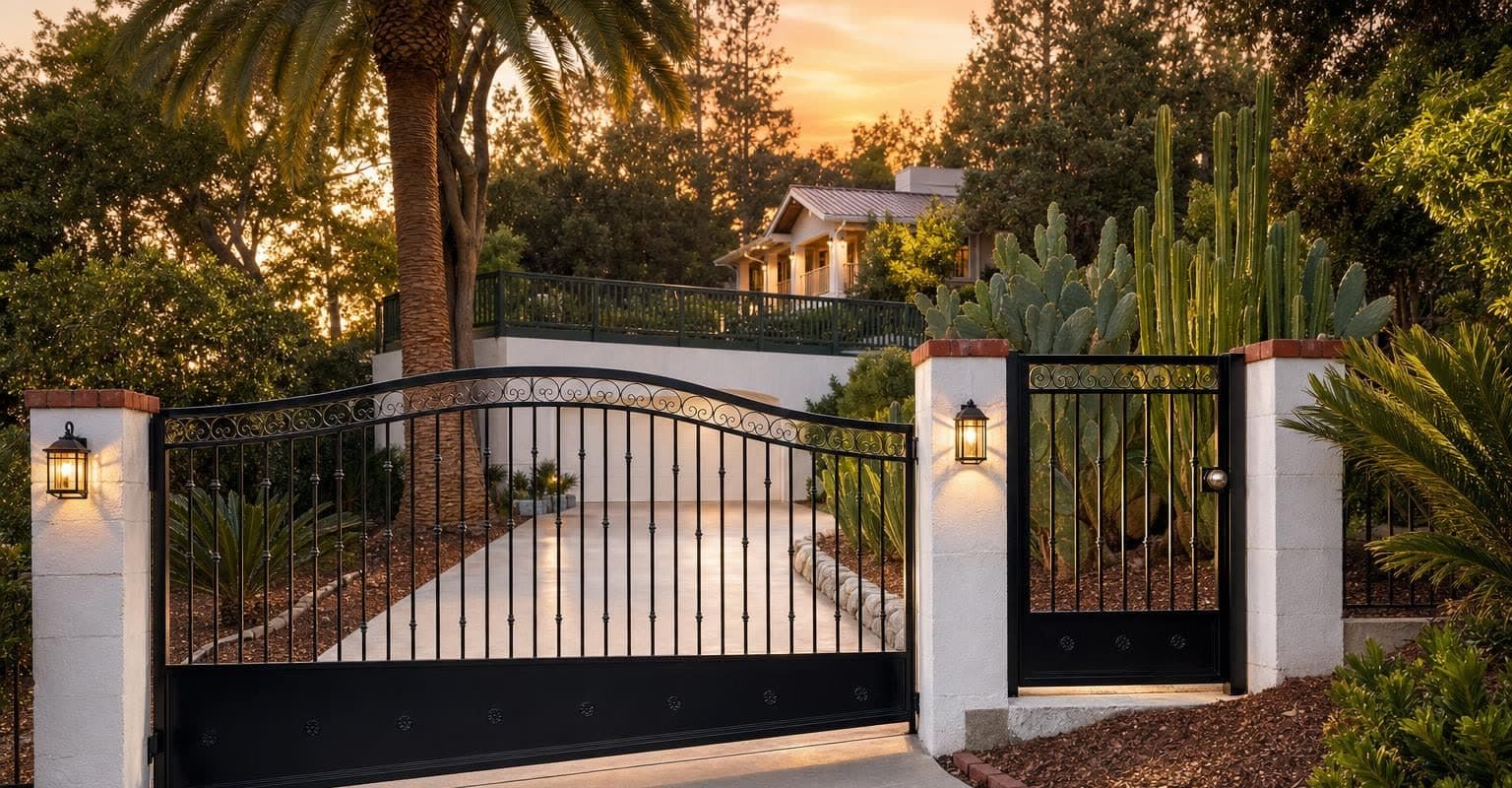
Single vs double swing
A single leaf is one operator and one hinge post carrying the whole width, and the longer the leaf, the more weight that post and operator carry. Every swing operator is rated for a maximum leaf length and weight; one maker’s residential and commercial swing operators, for example, stop at leaves of 10 and 14 feet. A double gate splits the width into two lighter leaves with two operators (or one operator driving a dual arm) and needs a center stop or drop rod. Doubles look right on wide, formal openings; singles are simpler on narrow ones.
When a sliding gate wins
A slide gate moves along the fence line, so the driveway behind it can climb, curve, or be full of parked cars, and none of it matters. That is why slides suit hillside drives in Encino, Studio City, Bel Air, and Calabasas, short Westside setbacks where a swinging leaf would block the apron, and wide commercial openings where one leaf on a track beats two swinging ones. What a slide needs instead is run-off: a clear, straight run along the fence line at least as long as the opening for the leaf to park in when open.
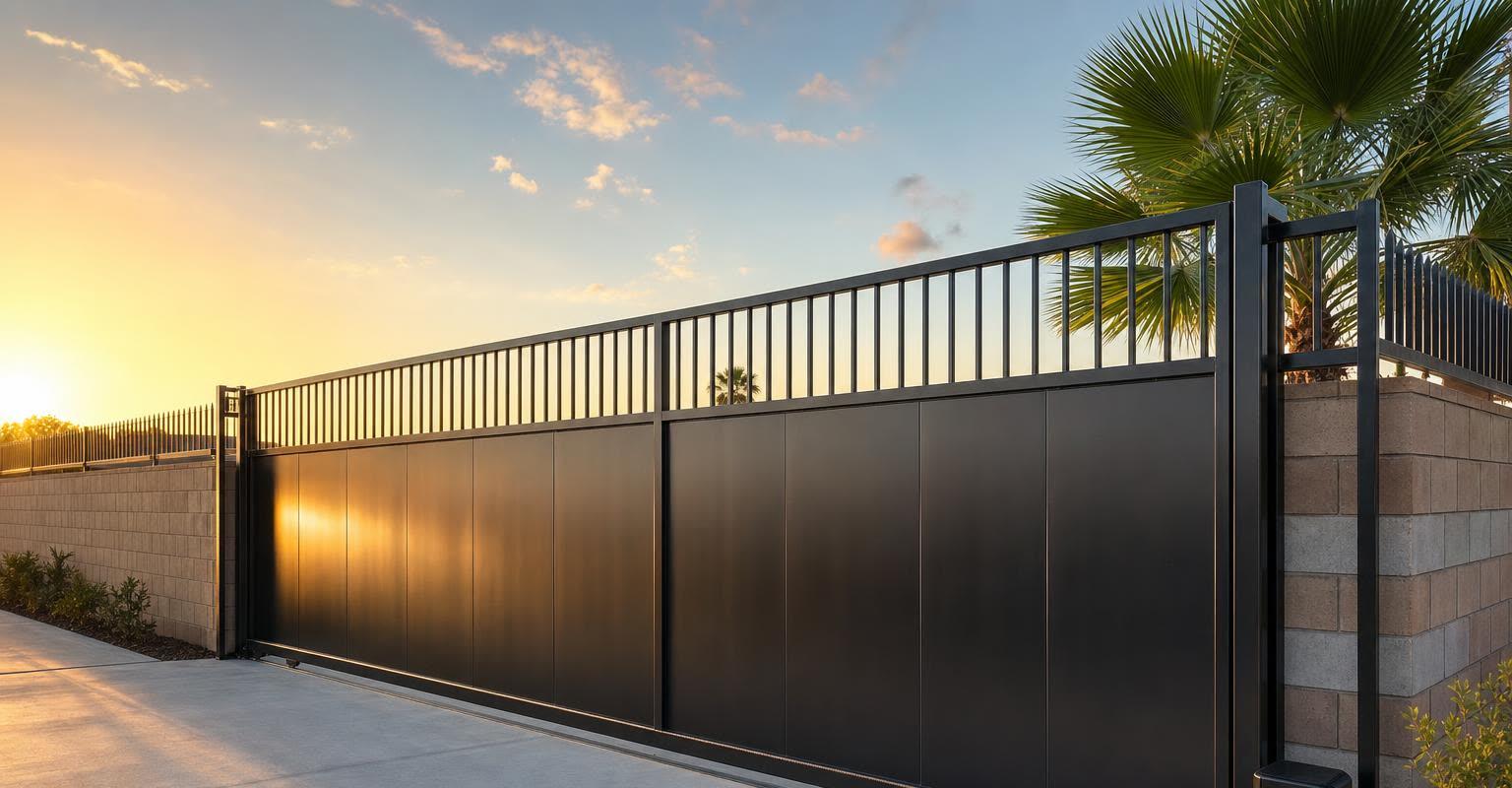
Track vs cantilever
A track slide gate runs on wheels along a steel track set into the driveway; it is the lighter slide and needs a level, clean track. A cantilever gate hangs from rollers on posts and never touches the ground. Its leaf is longer than the opening, because a counterbalance tail stays behind the fence line: plan on a tail of about half the opening, so a leaf and a clear run of about one and a half times the opening, and take the final length from the chosen system’s drawings. A cantilever needs heavier posts, but it clears cross-slopes, gravel, and debris and cannot jam on leaves in the track. Cantilever layouts for commercial sites are in the industrial gate guide.
Space: what each type needs
- Swing, inward: a clear, level quarter-circle behind the gate with a radius equal to the leaf width, plus room for the operator arm at the hinge post.
- Swing, outward: the same in front, and it must stay on your property. In the City of Los Angeles, a leaf swinging over the public sidewalk projects into the public right-of-way, where the building code allows only a short list of projections below 8 feet; the Bureau of Engineering treats anything else as unallowable, which can take a revocable permit and a Board report.
- Track slide: a straight, level run along the fence line at least the opening width plus a little, with the operator on a pad beside the gate. On an automated slide that stretch of fence is part of the safety design: openings in it and in the gate must be screened from the bottom to at least 6 feet so a 2¼-inch sphere cannot pass.
- Cantilever slide: the same run plus the counterbalance, about one and a half times the opening in all, and two or more roller posts spaced to carry the leaf.
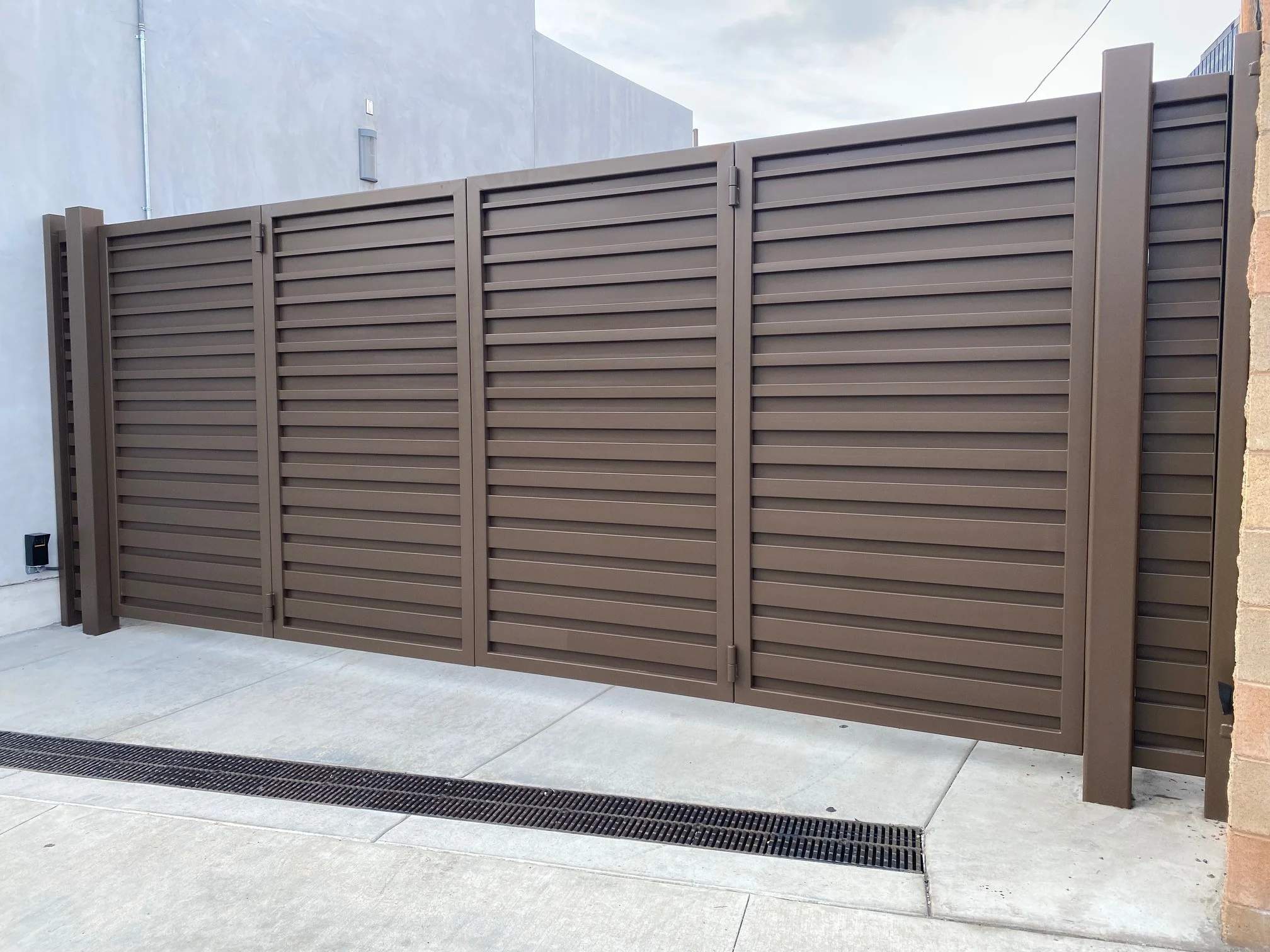
- Bi-fold: each leaf folds in half as it opens, so it needs roughly half the depth a swing leaf of the same width needs.
Slope
Slope can rule a swing gate out on a Los Angeles hillside. A swing leaf moves in a flat arc; ground rising inside that arc stops it. Rising hinges and raised bottom rails buy a few inches; beyond that, the slide is simpler and kinder to the operator. Cross-slope, a driveway that tilts sideways at the gate, is the one case where a track slide struggles and a cantilever is the clean answer. The full hillside decision is in Gates for Steep and Sloped Los Angeles Driveways.
Security and wind
Both types are as secure as their construction: gauge, height, hinge or roller guards, and the latch or the operator’s hold. A slide gate cannot be lifted off its hinges because it has none, and a locked operator holds a slide leaf firmly along its whole length; a swing gate needs hinge pins that cannot be driven out and a drop rod or center stop on doubles.
Wind matters more than people expect on solid privacy panels. A closed solid swing leaf is a sail: one opener maker counts any gate more than 30 percent covered as a privacy gate and warns that a gust on a full-panel swing gate can damage both the gate and the operator. A slide is not immune, and DASMA’s rationale for ASTM F2200 notes that wind can bend a moving slide gate out of plumb, which is what its guide rollers and receiver guide resist. On exposed lots (hilltops, the Palisades bluffs, the open Valley floor in Santa Ana season), the answer is a more open design or a slide built for the exposure.
Cost difference in Los Angeles
Neither type is cheaper by rule. An automatic driveway gate of either type starts at $10,000 – $12,000 in Method’s published prices, and where a given gate lands depends on the opening and the site: the width and weight of the leaf, a level pad or a track bed, the posts, the length of fence the leaf parks along, and the operator the gate needs. Method doesn’t publish a typical difference between the two, so compare them as itemized lines, the way How Much Does an Automatic Driveway Gate Cost in Los Angeles? sets out.
Maintenance and lifespan
- Swing: hinges want an annual look and occasional lubrication; the operator arm and its pivots wear; a leaf that starts to drop needs a re-hang before the operator starts to strain.
- Track slide: the track wants to be kept clear of leaves, gravel, and mulch; wheels flat-spot with age; the chain or rack wants tension and lubrication.
- Cantilever: the fewest ground problems, but rollers and their posts carry everything and want checking.
- Both: photo eyes wiped, loops kept clear, force settings verified on a service visit. The troubleshooting guide covers what goes wrong with each.
Looks: what each type does to the design
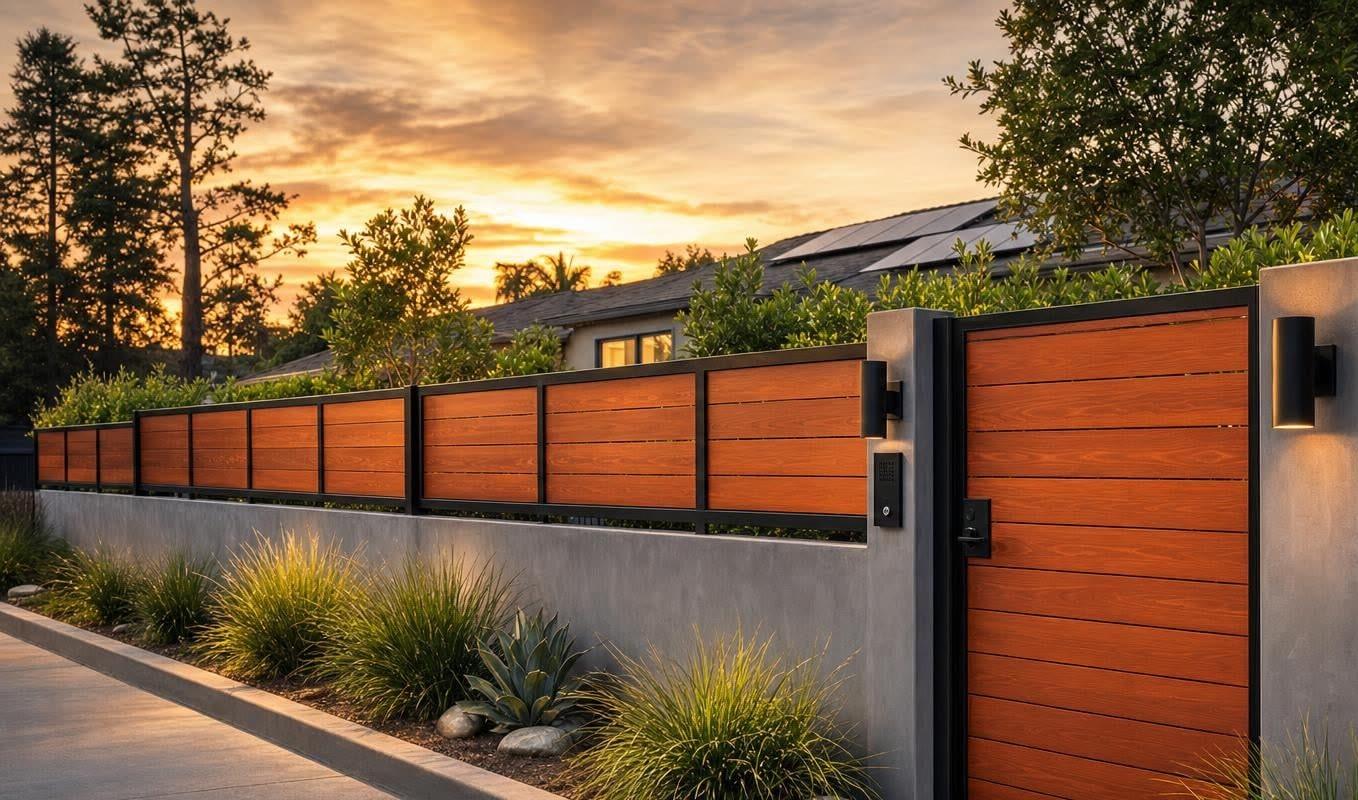
A swing gate reads as two panels meeting at the center, and its top line — arched, flat, or stepped — is the design. A slide gate reads as one long panel, which suits horizontal slats, vertical pickets, and modern steel; arches are possible but the leaf has to clear its posts, so the arch is usually shallow. Wood-on-steel works on both. Matching pedestrian gates and fence panels are drawn from the same sheet whichever way the driveway gate moves.
Questions we hear
- How much space does a sliding gate need?
- A clear run along the fence line at least as long as the opening, plus a little, for the leaf to park in. A cantilever gate needs more, because its counterbalance tail adds about half the opening again: plan on about one and a half times the opening in all, and confirm the length on the chosen system’s drawings.
- How do you gate a 25-foot driveway?
- Either a double swing or a single slide can close it; the room you have decides. A double swing splits it into two leaves of about 12½ feet, each needing a clear, level quarter-circle that deep behind the gate and an operator rated for that leaf’s length and weight. A single slide needs a straight run beside the opening of at least 25 feet for a track gate, or about 37½ feet for a cantilever, with that stretch of fence screened to 6 feet.
- Are sliding gates more secure?
- They are hard to lift off because they have no hinges, and a locked operator holds the whole leaf. A well-built swing gate with guarded hinge pins and a drop rod is also secure; construction matters more than type.
- Which is cheaper to automate?
- Neither, as a rule. A swing needs an arm operator on each leaf, or one operator driving both, and hinge posts that can carry them; a slide needs one operator plus a track or cantilever hardware and a longer clear run. Which one costs less depends on the opening and the site, and the cost guide shows how to compare them line by line.
- Which is better for a short driveway?
- A slide. If cars would have to wait in the street while a swing leaf clears the apron, the leaf should move sideways instead.
- Can a swing gate open outward toward the street?
- Only when the open leaf stays on your property. A leaf that swings over the public sidewalk in the City of Los Angeles is a projection into the right-of-way, which the Bureau of Engineering treats as unallowable and which can take a revocable permit and a Board report. Other cities have their own rules; the permit guide shows where to check.
- Which lasts longer?
- Neither has a built-in edge. A square leaf on an operator sized for it outlasts a neglected gate of either type: track slides ask for a clean track, swings ask for hinges that are checked.
Sources
- Hoover Fence Co.: chain link cantilever gate installation manual (rev. 7/10): a counterbalance of half the opening, at least 4 feet, and possibly longer where an operator pulls the gate closed from the tail; rollers on posts and no track in the opening.
- DoorKing: Series 6050 and 6100 swing gate operator manual (maximum leaf length and weight for each operator: 10 feet and 400 pounds, 14 feet and 500 pounds) and Model 9100 slide gate operator manual (gate ratings given for a gate installed level; positive stops).
- Ghost Controls: solid panel and privacy gate recommendations: a gate more than 30 percent covered counts as a privacy gate; a gust on a full-panel swing gate can damage the gate and the operator.
- DASMA: TDS 370, rationale behind ASTM F2200 (a moving slide gate pushed out of plumb by wind, receiver guides, roller guards, gate types); TDS 356, UL 325 FAQ and TDS 352 (screening a slide gate and the fence it covers from the bottom to 6 feet against a 2¼-inch sphere; operators rated for a maximum gate size and weight).
- LA Bureau of Engineering permit manual: front-yard fences, walls and gates (revised May 12, 2026) and projections into the public right-of-way (revised July 7, 2025): below 8 feet only the projections the building code lists; anything else unallowable, with a revocable permit and a Board report possibly required.
- Cost: Method’s published starting price for installation in the site pricing data; Method publishes no typical slide-versus-swing difference. Maker names appear only as sources for technical points; no dealer or service tie is implied. Sources read October 22, 2026.