Automation·Updated Oct 28, 2026·10 minute read
Can You Automate an Existing Driveway Gate? Our 6-Point Inspection
You have a perfectly good manual gate and you are tired of getting out of the car. The question is whether it can take a motor, and the honest answer comes from six things we check on site — most of which you can check yourself first.
By Method Doors & Gates · Van Nuys, CA · CSLB #873646
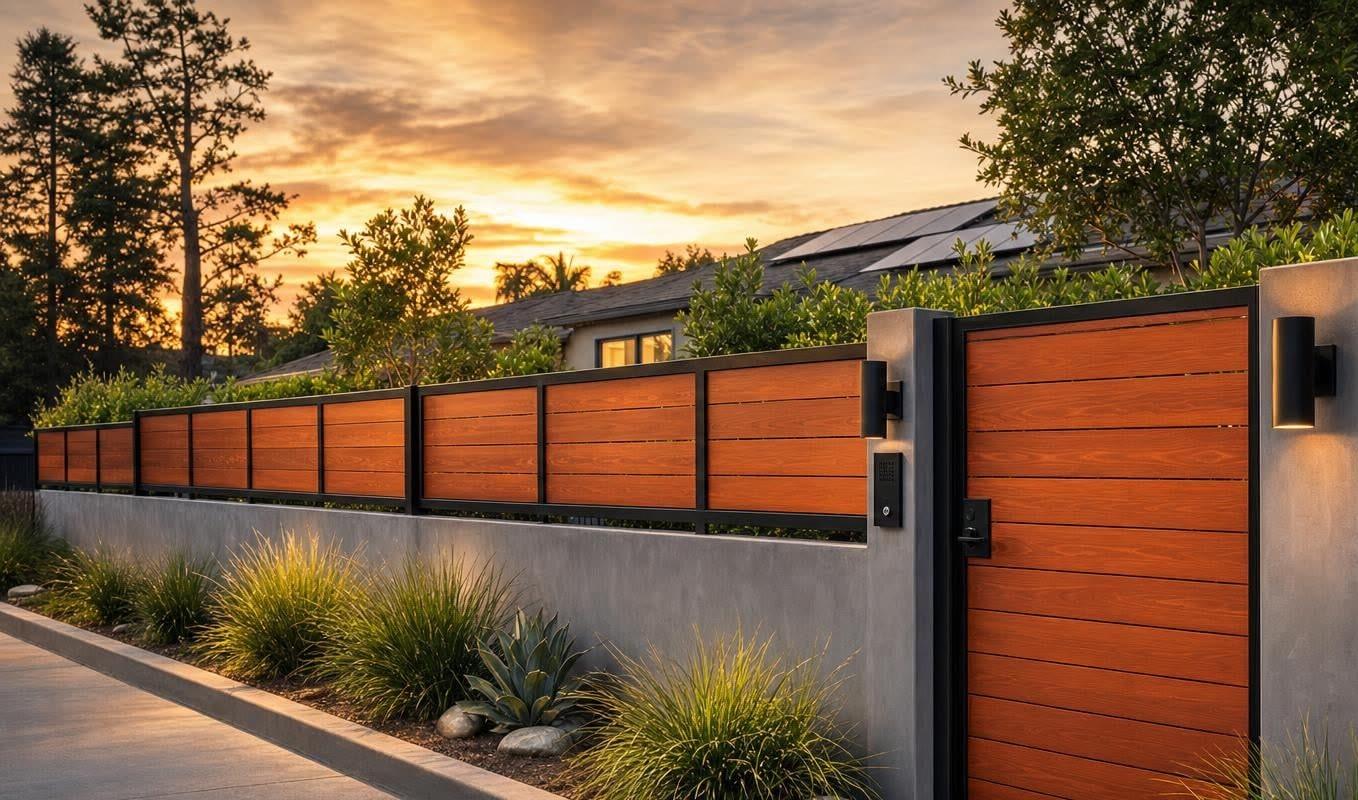
The six-point inspection we run on site
Every retrofit visit starts the same way, and the order matters: the first two checks decide whether the gate is a candidate at all, the middle two decide which operator, and the last two decide the price.
1. Is it square, and does it move freely by hand?
Open and close the gate yourself. It should swing or slide through its full travel with one hand, without lifting, dragging, or catching at any point. Measure the gap at the latch side top and bottom — if the bottom gap is noticeably bigger than the top, the leaf has dropped. An operator cannot fix a gate that binds; it will strain against the bind every cycle, trip its obstruction sensing, and wear out early, which is why DASMA’s installer guidelines say the gate must work freely before the operator goes on. A gate that fails this check goes on the repair list first.
2. Can the posts and hinges take the load?
An operator pushes and pulls on the leaf every time the gate runs, and every one of those cycles goes into the hinges and the hinge post. Grab the post and push; if it rocks, its footing is too small or has broken up. Look at the hinges: light strap hinges on a heavy leaf, or hinges welded to a thin-wall post, will not survive automation, and one operator maker’s manual calls a good set of roller-bearing hinges essential. A hinge upgrade or a reset post is a normal part of a retrofit — it just has to be on the list.
3. Weight and length versus operator class
Operators are rated by leaf weight and length and by how many times a day they run; one swing operator line, for example, is rated at 400 pounds on a 10-foot leaf and 500 pounds on a 14-foot leaf. A 12-foot cedar gate on a steel frame weighs far more than a 12-foot aluminum panel, and a wood gate that is not on a steel frame is often heavier than the owner expects because of the water it has soaked up. We weigh or estimate the leaf, measure it, count the cycles, and size the operator with margin. Undersizing is the mistake to avoid, on a DIY retrofit or any other: an operator rated below the gate’s weight, length, or daily use strains on every cycle.
4. Power: is there a circuit at the post, or do we trench?
The operator needs power. If there is an existing outdoor circuit near the gate, the electrical line on the estimate is small. If the nearest circuit is at the house and the driveway is long, there is a trench, conduit, wire, and an electrical permit for the new circuit; on a home, we usually bring in a licensed electrician to run it. On long Valley driveways with good sun, a solar operator can avoid the trench. Its panel has to sit clear of shade all day, and the cycles it supports fall with fewer sun hours and more accessories, so on a shaded hillside lot it usually cannot keep up, and we will say so.
5. Geometry: swing clearance, slope, and setback
A swing gate needs level ground to swing into and room for the operator arm at the hinge side. A gate at the top of a rising driveway may not be able to swing inward at all without rising hinges, and a gate at the sidewalk cannot swing outward over the public right-of-way. A slide gate needs run-off room along the fence line equal to the opening, plus a little. If the geometry does not work for the gate you have, the answer may be a different gate type rather than a retrofit — see Gates for Steep and Sloped Los Angeles Driveways.
6. Safety devices: where do the photo eyes and edges go?
Automating a gate makes it a machine, and the operator standard, UL 325, requires two independent means of entrapment protection at each entrapment zone — typically photo eyes plus a contact edge, or the operator’s built-in obstruction sensing plus a non-contact device. On a slide gate, the gate and the fence it slides along also have to be screened up to at least 6 feet against a 2¼-inch sphere, which keeps hands out of the mechanism. On an existing gate that sometimes means adding mesh or a guard panel. We plan where the devices mount during the inspection, because a gate with no place to put them is not a safe candidate.
Gates that automate well
- Steel and iron swing gates on steel posts with ball-bearing or heavy weld-on hinges.
- Wood gates that were built on a welded steel frame — the wood is cladding, the frame carries the load.
- Slide gates already running on a track or cantilever hardware that is straight and true.
- Any gate that was designed with automation in mind and simply never got the operator.
Gates that need work first — and what the work is
- A dropped latch side: re-hang on new hinges, or reset the hinge post.
- A rocking post: dig and re-pour the footing, or replace the post.
- A slide gate with flat-spotted wheels or a bent track: new wheels or track before the operator goes on.
- A wood gate that sticks in summer: wood movement on a wood frame. Sometimes a trim and a seal; sometimes a new steel frame under the existing boards.
- No safe place for safety devices: a guard panel, mesh infill, or a mounting post for the photo eyes.
Gates that should be replaced instead
Rust-through at the bottom rail, cracked welds at the hinges, a wood frame that has racked out of square, or a leaf that was never sized for the opening — putting an operator on those is money spent twice. We can build a new leaf to the existing posts and reuse your operator plan, keypad, and loops, which is usually less than people expect. Repair or replace the whole gate covers how we decide.
Choosing the operator for a retrofit
For swing gates the choice is between a linear (arm) operator that mounts to the post and the leaf, an articulated arm for gates on wide pillars, and an underground operator when nothing may show. For slide gates it is a chain-drive or rack-and-pinion operator on a pad beside the gate. We pick by leaf weight and length, daily cycles, slope, whether you want battery backup, and what access control you plan to add. Brand matters less than sizing and installation. DASMA’s guidance asks for an operator suited to the gate’s type, size and frequency of use, and notes that a smooth-running gate prolongs the operator’s life.
What it costs in Los Angeles
| Scenario | What is included | Starting price |
|---|---|---|
| Light swing gate, power at the post | Residential operator, photo eyes and edge, receiver and remotes, keypad | Low end of $5,000 – $7,000 |
| Heavier or wider leaf, short electrical run | Operator sized for the leaf, safety devices, keypad, remotes, hinge upgrade if needed, circuit from a nearby panel | Middle of the range |
| Heavy or long slide, trenched power, loops, intercom | Higher-class operator, saw-cut loops and detectors, telephone entry or video intercom, trench and conduit; electrical permit help billed separately | Top of $5,000 – $7,000; commercial-grade systems are quoted by scope |
Repairs the gate needs first — a re-hang, a post reset, new wheels — are included in the proposed scope and affect the written price. The full cost picture, including new gates, is in How Much Does an Automatic Driveway Gate Cost in Los Angeles?.
What the day looks like
- 1We confirm the gate moves freely and the posts are solid, and do any pre-agreed repair first.
- 2The operator is mounted to the post and leaf (or on its pad beside a slide gate), and the arm or drive is aligned so the gate runs true.
- 3Power is connected — from the existing circuit or the new run — and the photo eyes, edges, and any loops are mounted and wired.
- 4We set the open and close limits, calibrate the obstruction sensing to the gate’s real weight, and program the remotes and keypad.
- 5We cycle the gate with you, show you the manual release, and leave the documentation.
Questions we hear
- Can I keep my wood gate?
- If it is on a steel frame and passes the checks above, yes. If it is wood on wood, it depends on how square it still is; sometimes the answer is a steel frame under your existing boards, which keeps the look and ends the sag.
- Do I need a trench for power?
- Only if there is no circuit near the gate. Many houses have an outdoor circuit close enough; long driveways often do not. Solar avoids the trench on lots with good sun.
- Can the operator be solar?
- Yes, for a gate whose daily cycles and accessories the panel can keep up with, and a panel that sits clear of shade all day. Busy gates, power-hungry accessories, and shaded hillside lots are poor fits; we will tell you which yours is.
- Will the motor damage my old gate?
- Not if the gate is square and free-moving and the operator is sized to it. Damage happens when an operator is forced to push through a bind — which is exactly what the inspection is designed to catch.
- Do I need a permit to add a motor?
- In the City of Los Angeles, the municipal code requires an electrical permit for new electrical wiring unless the code exempts it, so a new circuit for the operator needs one, and the installation has to meet UL 325. Height and location rules do not change because the gate now has a motor. Los Angeles Gate & Fence Permits shows which authority covers your address.
- How long does a retrofit take?
- Usually 3–5 business days from signed contract to finished job. A trench for power, a post reset, saw-cut loops, or a repair before the operator goes on can each add time; we put the schedule on the estimate.
Sources
- DASMA’s Gate System Safety brochure and TDS 352 for installers and end users: the gate must work freely, and worn hardware be repaired, before the operator goes on; an operator suited to the gate’s type, size and frequency of use; slide-gate screening below 6 feet; a smooth-running gate prolongs the operator’s life.
- DASMA TDS 353, vehicular gate operators and UL 325 and TDS 356, UL 325 FAQ: two independent entrapment protection means for each zone, with the operator’s inherent sensing counting as one; UL 325 applies to existing gates that are to be motorized and is referenced in the building and fire codes inspectors enforce; each operator carries a maker’s rating for the largest, heaviest gate it can move; a slide gate and the stretch of fence it covers are screened to 6 feet against a 2¼-inch sphere.
- DASMA TDS 370, rationale behind ASTM F2200: existing gates that are to be automated may need upgrading first.
- DoorKing: Series 6050 and 6100 swing gate operator manual: ratings of 400 pounds on a 10-foot leaf and 500 pounds on a 14-foot leaf; roller-bearing hinges essential for swing gate operation. LiftMaster: solar gate cycles reference guide (dealer-hosted copy): panels clear of shade all day; daily cycles set by sun hours, accessories, and single or dual gates.
- City of Los Angeles electrical permits: LADBS, “When do I need an Electrical permit?” and LAMC Sec. 93.0201 (no electrical wiring installed without a permit unless the code exempts it; amended by Ord. 187,719, effective January 23, 2023; unofficial copy of the code).
- Price basis: Method’s published retrofit starting price in the site pricing data; the retrofit time is Method’s, confirmed October 28, 2026. Citing a manufacturer’s document is not a claim of any dealer or service arrangement. Sources read October 22, 2026.